EKAM 2026 Highlights Inclusive Futures and the Future of Retail Work
The summit, organised by RAI and TRRAIN, brought industry leaders together to discuss diverse talent, accessible workplaces and equal employment opportunities.
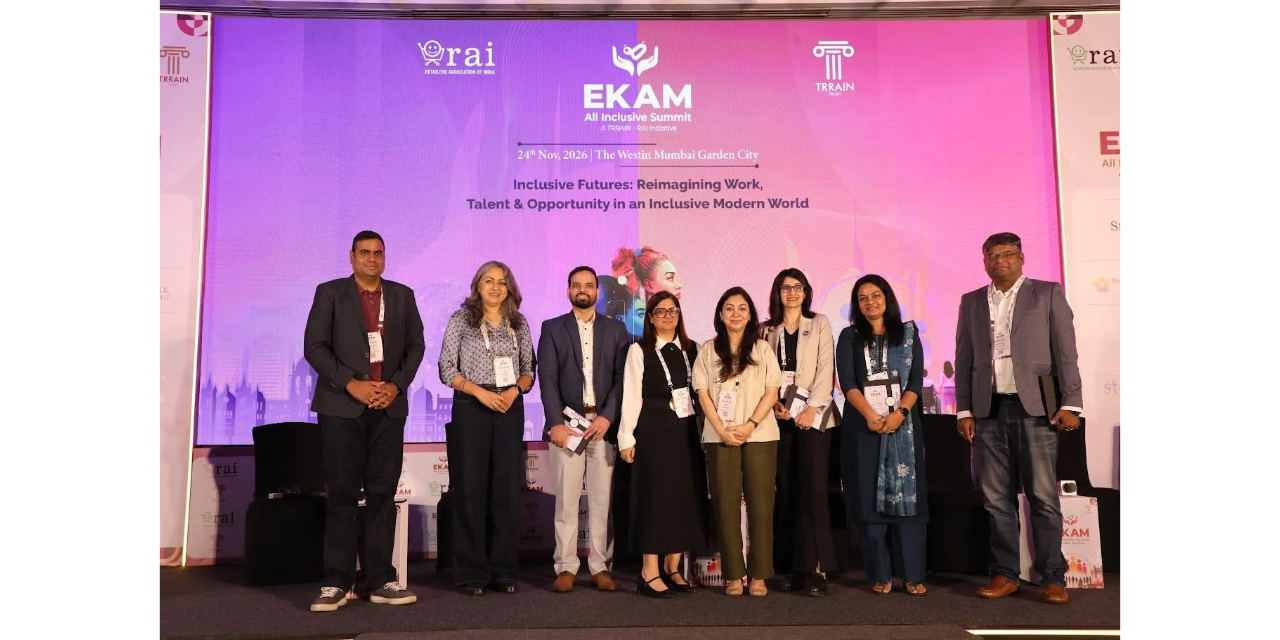
EKAM – The All Inclusion Summit 2026 brought together retail leaders, policymakers and industry experts to discuss the future of inclusive employment. The Retailers Association of India (RAI) and the Trust for Retailers and Retail Associates of India (TRRAIN) jointly hosted the summit on 24 November at The Westin Mumbai Garden City, Goregaon.
Centred on the theme, “Inclusive Futures: Reimagining Work, Talent & Opportunity in an Inclusive Modern World,” the event focused on building inclusive workplaces. It also highlighted the need to recognise diverse talent and expand access to employment opportunities.
The discussions explored progressive workplace cultures and new approaches to talent development. Speakers also examined ways to create equitable pathways for people from diverse backgrounds to participate, grow and succeed.
Industry Leaders Discuss Inclusive Retail Workplaces
The summit featured discussions on innovative approaches to workplace inclusion and talent development. Participants shared practical perspectives on expanding opportunities across the retail sector.
The sessions also explored how retailers can build an ecosystem that supports diverse employees and serves varied consumer needs. In addition, speakers highlighted the role of accessible workplaces in creating equal opportunities.
The keynote address was delivered by Preeti Budhraja, Country People and Manager, IKEA India. Other speakers included Divya Seth, Head HR – Pantaloons & OWND, Aditya Birla Fashion and Retail Ltd.; Chakrapani Sharma, General Manager – HR, McDonald’s India; and Nabamita Banerjee, CHRO, Shoppers Stop Limited, among others.
RAI Highlights Retail’s Role in Creating Equal Opportunities
Kumar Rajagopalan, CEO of the Retailers Association of India (RAI), highlighted the industry’s responsibility towards inclusive employment.
He said, “For many young Indians, a retail job is their first step into formal work. That gives our industry a responsibility that no policy document can fulfil on its own. Treating everyone equally is the floor, not the finish line. People don’t arrive at work from the same starting point, and pretending they do isn’t fairness. At EKAM, retailers speak candidly about that balance. They discuss what it takes to build workplaces where accommodating difference is routine rather than an exception, and where a person with a disability, a queer employee or a woman returning to work is seen first as talent.”
TRRAIN Calls for Meaningful Inclusion
Ameesha Prabhi, CEO, TRRAIN, emphasised the need to move beyond goodwill and create practical employment opportunities for underrepresented communities.
She said, “Persons with Disabilities, Young Women from underserved and marginalised communities and the LGBTQ+ community do not need sympathy from the industry; they need opportunity. They need access to quality training, meaningful employment, and leaders who recognise their potential and invest in their growth.
Inclusion cannot be built on goodwill and intent alone. It must be embedded in the way businesses hire, train, design workplaces and nurture talent. It is about creating an environment where a youth with visual or mobility impairment or a youth who is deaf is not just given a job, but equipped to perform, grow and build a meaningful career. Inclusion is a responsibility and an opportunity for the industry. At EKAM, we bring the industry together to move beyond conversations and commitments towards meaningful and measurable action towards a more inclusive workforce”
Workplace Support Beyond Recruitment
Sameer Iyer, Chief of Livelihood Operations, TRRAIN, highlighted the importance of supporting employees after recruitment. He explained how managers and teams can help employees adapt to workplace environments.
He said, “Training a candidate is only half the work. The other half is getting the store ready for them. When a deaf associate joins, the team around them needs to know how to communicate. When a young woman takes up her first job away from home, the support and guidance she receives from her manager during initial weeks can make all the difference to whether she stays and succeeds. We’ve learnt that inclusion is won or lost after placement, in ordinary moments on the shop floor. Livelihoods are sustained when both the candidate and the workplace support and adapt to each other.”
Speakers Share Perspectives on Diversity and Inclusion
Neeti Sharma, Director & Founder, Spurv Growth Partners, discussed retail’s potential to attract and develop diverse talent.
She said: “Perhaps one of retail’s greatest opportunities lies in is its ability to attract and hire diverse talent. Retail thrives on people — their stories, perspectives, experiences and aspirations. Behind every role, every counter and every customer interaction is a wealth of potential. The magic lies in recognising this potential beyond the obvious. When diverse talent finds equal opportunity, organisations find success. And these opportunities are not just about being hired, these are about finding a voice in the room, being able to learn and seek growth. An equal opportunity to grow and shine!”
Divya Seth, Head HR – Pantaloons & OWND, Aditya Birla Fashion and Retail Ltd., highlighted the role of everyday workplace practices in retaining diverse talent.
She said: “Diversity gets people through the door. Inclusion decides whether they stay. And in retail, that isn’t decided in a policy manual. It’s decided on the shop floor, by a manager, in small moments. Equality says everyone deserves respect. Inclusion asks what each person needs to feel it.”
Key Discussions Focus on the Future of Inclusion
The summit addressed several aspects of diversity, equity and inclusion through focused discussions. Key topics included:
- “The Inclusive Workplace of 2030: What Needs to Change Today?”
- “The Future of Talent: Who Are We Still Missing?”
- “Beyond the Mandate: Making Disability-Inclusive Hiring Work.”
These sessions examined the changes needed to build inclusive workplaces and recognise underrepresented talent. They also highlighted the importance of accessible employment opportunities across the retail sector.
Through EKAM 2026, RAI and TRRAIN reaffirmed their shared commitment to an inclusive retail ecosystem. Their focus remains on celebrating diverse talent, promoting equal opportunities and supporting workplace cultures that enable individuals to grow while contributing to business and community development.