
Keeping Loom Accessories Traceable When Shipping Weaving Machinery to Russia
Contributed by S.E.Via Logistics team
Clear packing records and item-level identification help manufacturers, buyers and logistics teams distinguish machine components from separately ordered spares during international shipments.
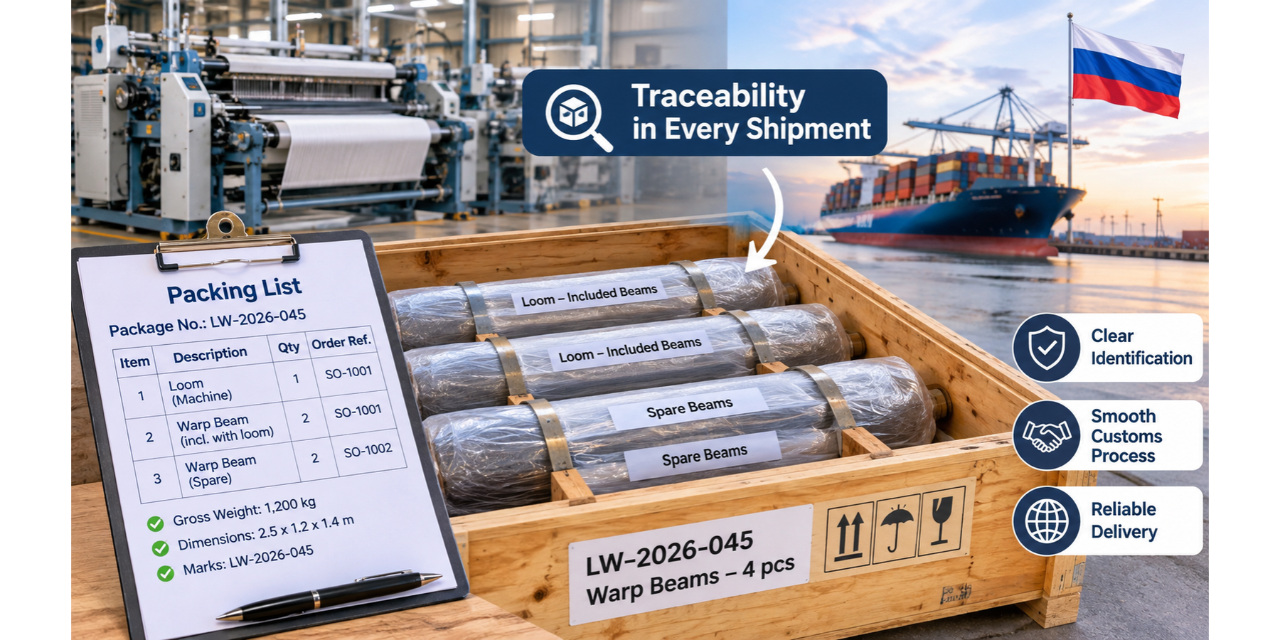
An Indian manufacturer is preparing to ship a loom to a textile mill in Russia. In this hypothetical order, the agreed loom package includes two warp beams. The buyer has also ordered two additional beams as spares. All four can fit into a single crate.
However, by the time the crate reaches the loading bay, its label simply reads “warp beams, four pieces”. Although this accurately describes the physical contents, it does not distinguish the beams included with the loom from those ordered separately.
The warehouse can retain the single crate if it is suitable for the load. However, the documentation team needs a reliable way to identify each item without assuming that the physical packing arrangement determines the invoice or customs treatment.
The best time to establish this link is while the accepted order and physical components are both available for verification.
Start with the Buyer’s Accepted Order
Before preparing the final packing list, consult the sales and production teams. Obtain the accepted order and confirm the machine’s agreed scope of supply.
In this example, one order line covers the loom and its two included beams. A separate line covers the additional spare beams. Record the exact item descriptions and quantities against both lines. If the accepted order includes an internal model name or part reference, carry it into the supporting documentation. This allows the buyer to trace each component back to the original order.
Next, ask the workshop team to verify the physical components. Beams may share a general description but differ in dimensions or compatibility with specific loom models. Therefore, photograph or record the manufacturer’s existing references and note where each reference appears.
If a component does not carry a permanent mark, the warehouse can apply a packing identifier for traceability. However, keep this identifier separate from the manufacturer’s serial number. This distinction helps the receiving team understand exactly what it needs to check.
Build a Packing Schedule the Warehouse Can Use
Assign a unique package number to the crate. Under this number, list the beams included with the loom separately from the additional spares. Each entry should refer to its corresponding order line.
If the packing list does not have enough space, attach a separate schedule. Ensure that the same package number appears on the crate, packing list and supporting schedule.
| Physical contents | Sales record | Information for handover |
|---|---|---|
| Loom in its main package | Accepted order identifies the machine and agreed scope | Machine model or reference, package number and applicable technical sheet |
| Two beams in the beam crate | Included in the machine package in this example | Individual packing marks and reference to the machine order line |
| Two spare beams in the same crate | Ordered separately in this example | Individual packing marks, separate order line and quantity |
For transport booking, count one beam crate. However, retain all four individual item references in the supporting schedule.
Record the actual gross weight and external dimensions of the closed crate for the booking. Keep individual item weights in the supporting schedule, using manufacturer records and confirmed measurements.
This approach allows the receiving team to count the delivered packages before opening them. It can then verify the individual contents against the schedule.
Share the Documentation with the Importer Before Booking
Before confirming the shipment, send the buyer the current invoice draft, packing list, supporting schedule and relevant manufacturer technical sheet. Ask the buyer to check the quantities, descriptions and presentation of the spare items.
If the warehouse later substitutes or moves a beam, document the change. Then send the revised records to the buyer before the carrier receives its final instructions. Retain the earlier version with a note identifying the document that supersedes it.
The buyer can also use the schedule to brief the receiving crew. In this example, the crew must identify the beams intended for the loom before installation begins. Therefore, include the package number and individual packing marks in the unloading plan.
If the crate carries a large external label and smaller internal tags, include copies of both in the handover documents. This helps the receiving team compare the delivered components with the version approved by the buyer.
Keep Transport and Customs Information Distinct
Give the importer and its customs specialist the commercial descriptions, technical information and actual shipment configuration. They can then assess how to declare the machinery and spare components under the applicable import requirements.
Meanwhile, the transport team can use the confirmed package count, dimensions and gross weight to arrange the booking.
A clear handover record supports both processes without confusing their responsibilities. It connects the physical contents to the accepted order, helps the buyer verify the shipment and gives the relevant teams the information needed to make their respective decisions.


