
Denim and Sportswear Supply Chain Leaders Discuss Process Innovation at Ecomondo 2026
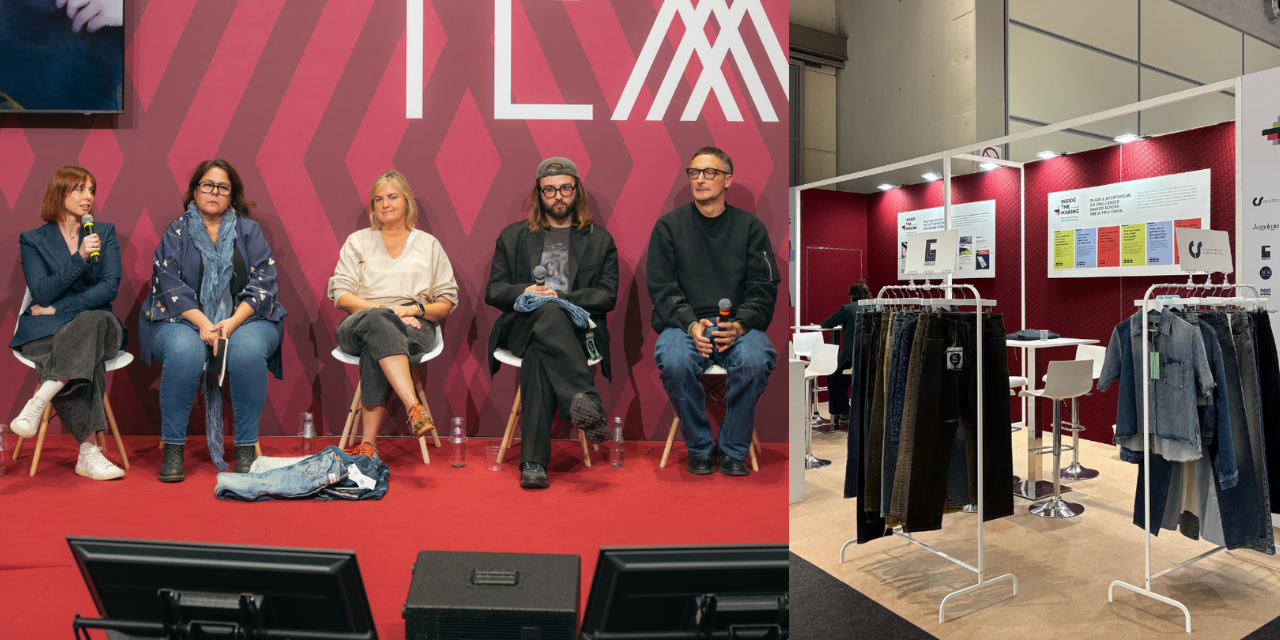
Industry leaders from the denim and sportswear supply chain gathered at Ecomondo 2026 to discuss transparency, sustainability and collaboration. The panel, titled “Inside the Making: The Power of the Process”, took place on 5 November in the Textile District Workshop Area in Rimini, Italy.
The discussion focused on three key issues: supply chain transparency, restrictions on generic green claims and stronger collaboration across production stages.
Menabò Group curated the strategic initiative Inside the Making. It brought six European industry leaders together for the panel. These partners represent garment manufacturing, trims and accessories, finishing technologies, dyeing and washing, digital printing, and strategic branding and communications.
The initiative aims to address fragmentation across the textile industry. It highlights why the circular transition requires cooperation at every production stage. No single company can achieve this shift alone.
Professor Marco Lucietti of Sapienza University of Rome moderated the discussion. The speakers explored how businesses can respond to changing EU regulations. These include Extended Producer Responsibility (EPR), the Ecodesign for Sustainable Products Regulation (ESPR) and anti-greenwashing directives.
They also examined ways to make sustainability measurable and commercially valuable. Furthermore, the panel highlighted the importance of communicating genuine environmental performance to consumers.
Industry Voices on Supply Chain Transparency
Marco Lucietti, Professor of Governance and Sustainability for Fashion Companies, Sapienza University of Rome, and Moderator:
“We’re presenting ‘Inside the Making’ to show how essential the supply chain is for brands to bring high-quality, lower-impact garments to the market. Our value chain will increasingly have to comply with strict European regulations such as the EPR, the ESPR, and the Waste Framework Directive, and give consumers full transparency on how garments are made.”
“People in our industry still tend to see sustainability either as an added cost or as a marketing tool. The real challenge we are addressing today is how to achieve true profitability alongside more sustainability, and how ingredients and supply chain players can help brands communicate real value rather than just competing on price.”
Federico Corneli, CEO at C&S:
“We are deeply focused on improving performance across our entire supply chain, which is why we hold numerous certifications. We work extensively with recycled materials and are preparing for the upcoming Digital Product Passport (DPP), which means opening our company doors to show with transparency how and where our garments are made.”
Barbara Gnutti, representing ACM and NextPrinting:
“At ACM, a continuous research is focused on combining custom engineering with sustainability: they run on 100% renewable energy, recycle process water internally, and work with GRS-certified recycled materials, both in metals and leathers, to provide branding components that last throughout the garment’s lifecycle.”
“With digital printing, NextPrinting prints patterns directly onto the fabric before cutting, significantly reducing energy, water, and chemical consumption. Beyond eliminating limits on creativity, this technology allows them to repurpose deadstock and leftover fabrics, turning what would otherwise be waste into high-value garments.”
Carlo Cossiri, Partner and Plant Manager at Green Lab:
“We have shifted a significant portion of manual and wet operations over to laser technologies. The washing process now primarily stabilises and refines what the machine has already marked, significantly reducing energy, water, and chemical use compared with conventional washing. It works with a reverse logic: taking out rather than adding.”
Carmen Silla, Global Marketing Director at Jeanologia:
“Through our MissionZero initiative, we aim to minimise water use and eliminate hazardous chemicals from the process. Instead of relying on traditional, resource-intensive practices like conventional stonewashing, we use our Airwash technology: we take atmospheric air and transform it into ozone to wash and fade garments using air rather than water, significantly reducing water use while protecting workers’ health.”
Margherita Verlicchi, Partner and Brand Strategist at Menabò Group:
“New European regulations require companies to substantiate environmental claims with proven, verifiable performance in all consumer-facing communications. At Menabò, we study the technological innovations of the companies we support to ensure their impact is communicated accurately, knowing that data alone is not enough: reaching people always requires an authentic, empathetic, and compelling narrative.”
Technology Driving Sustainable Production
The panel highlighted several technologies that can improve sustainability across denim and sportswear production.
C&S discussed its use of recycled materials and certifications. The company is also preparing for the Digital Product Passport. This initiative supports greater transparency about garment production and sourcing.
Meanwhile, ACM highlighted its use of renewable energy and internal water recycling. It also uses GRS-certified recycled materials for garment branding components.
NextPrinting demonstrated how digital printing can reduce resource consumption. By printing patterns directly onto fabric before cutting, the technology also helps reduce material waste. In addition, it allows manufacturers to reuse deadstock and leftover fabrics.
Green Lab and Jeanologia presented alternative approaches to denim finishing. Green Lab has shifted several manual and wet processes to laser technologies. Similarly, Jeanologia’s Airwash technology uses ozone to wash and fade garments while reducing water consumption.
Transparency and Collaboration Shape the Circular Transition
The discussion also highlighted the growing importance of accurate sustainability communication. European regulations increasingly require companies to support environmental claims with verifiable evidence.
Therefore, brands and suppliers must go beyond broad sustainability statements. They need to demonstrate measurable results and communicate their production practices clearly.
Through Inside the Making, Menabò Group and its partners aim to show how collaboration across the value chain can support lower-impact garment production.
Ultimately, the initiative reinforces the need to combine technology, responsible manufacturing and transparent communication. Together, these approaches can help denim and sportswear companies advance the circular transition.


