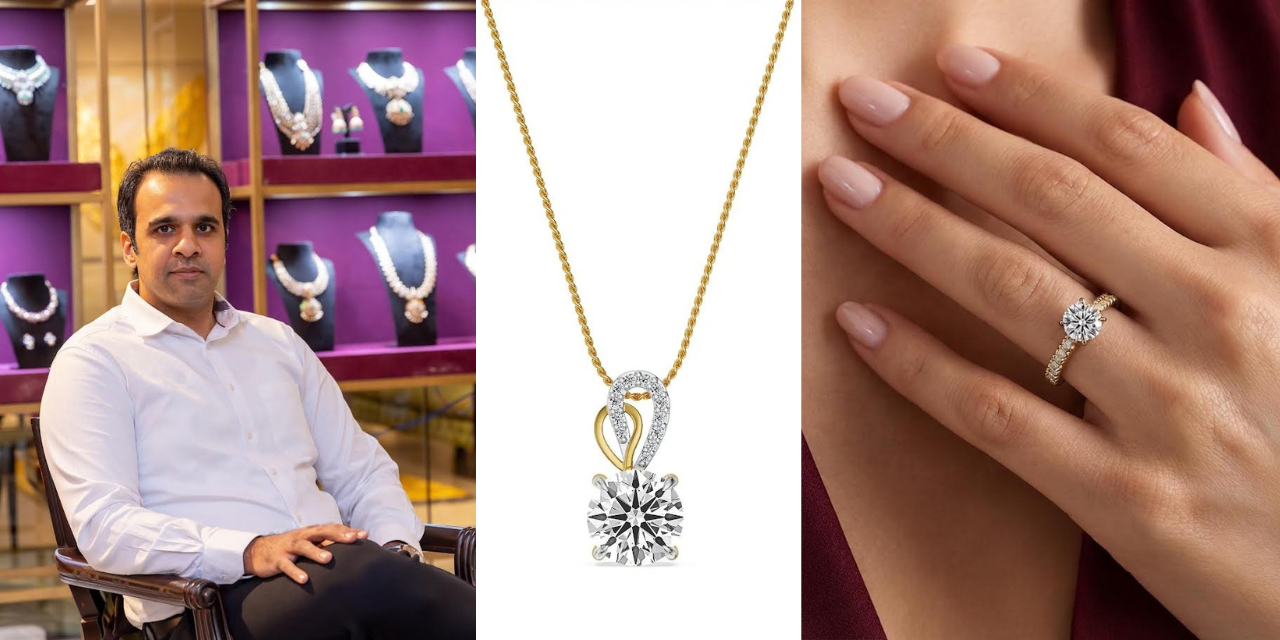
Dheeraj Hemdev, Director, Ananya Jewels
Why Cut Should Be the Priority When Choosing a Solitaire
When customers visit Ananya Jewels to choose a solitaire, the discussion usually starts with three factors: carat weight, colour and clarity.
Customers consider how large they want the diamond to be, which colour grade suits them and what level of clarity they prefer. Their choices often depend on personal taste and budget.
However, there is one factor where the recommendation is more definite: do not compromise on cut.
Over the years, a simple approach has helped clients make this decision. They choose a carat weight, colour and clarity that suit their preferences and budget. Meanwhile, the cut remains at the standard recommended by the jeweller.
Clients may choose to move up or down in size, colour or clarity. However, once they understand how cut affects a diamond’s appearance, they are usually less willing to compromise on it.
Understanding the Difference Between Cut and Shape
Cut is often confused with a diamond’s shape. However, the two describe different characteristics.
Round, oval, pear, emerald and marquise refer to the shape of a diamond. Cut quality, on the other hand, describes how well the diamond has been proportioned and fashioned to interact with light.
A diamond may have high carat weight, excellent colour and strong clarity. Yet, poor cut quality can prevent it from displaying these qualities effectively.
When the proportions work together correctly, light enters the diamond and reflects back to the viewer. This creates the brightness, fire and scintillation that give a diamond its sparkle.
Therefore, two diamonds with similar carat weight, colour and clarity can look very different. One may appear brighter, more lively and more attractive simply because of its cut.
What to Look for in a Round Solitaire
Round brilliant diamonds continue to account for a large share of solitaire purchases. For these diamonds, the commonly used Triple Excellent, or 3EX, standard becomes particularly important.
When selecting a round solitaire, three parameters receive particular attention:
- Cut: How effectively the diamond’s proportions and facets handle light.
- Polish: The quality of the finish on the diamond’s facet surfaces.
- Symmetry: How precisely the facets have been shaped and aligned.
When all three receive an Excellent grade, the diamond meets the commonly used Triple Excellent, or 3EX, standard.
These grades are more than technical specifications. They relate directly to the craftsmanship and visual performance of the finished diamond.
For this reason, 3EX often serves as the starting point when selecting round solitaires for clients. It remains an established trade term for Excellent cut, polish and symmetry in round brilliant diamonds.
Fluorescence Also Matters
Along with cut, polish and symmetry, jewellers also consider fluorescence.
Fluorescence remains separate from the 3EX grading. It describes how a diamond reacts when exposed to ultraviolet light.
When other specifications remain comparable, Ananya Jewels generally prefers round solitaires with no fluorescence.
Why 3EX Diamonds Can Still Look Different
Triple Excellent provides an important starting point. However, it does not mean that every 3EX diamond will look exactly the same.
Diamonds within the 3EX category can still have different proportions. Table size, crown angle, pavilion angle and overall depth work together and influence how the stone handles light.
As a result, two diamonds can carry the same 3EX grading but still have different visual characteristics.
Cut evaluation also involves several aspects of light performance, design and craftsmanship. Therefore, no single proportion should determine the selection on its own.
This is where experience becomes important. Once the client’s preferred carat weight, colour and clarity are clear, diamonds that meet the desired cut standards can be shortlisted and assessed individually.
Specifications help narrow the options. However, experience helps make the final selection.
Finding the Right Balance Across the 4Cs
Budget plays an important role when customers choose a solitaire. Buyers often need to decide how much to allocate across the 4Cs: carat, colour, clarity and cut.
Should they choose a slightly larger diamond? Should they move to a higher clarity grade? Would a higher colour grade make a noticeable difference?
There is no single answer because every customer has different priorities. Therefore, carat, colour and clarity can be adjusted according to personal preference and budget.
Cut, however, is different.
Customers may not always ask about cut first. Yet, once they understand how a well-cut diamond affects brilliance and overall appearance, it becomes easier to see why cut deserves priority