Fashion’s Agricultural Footprint Comes Under Focus
The fashion industry influences almost one-third of the world’s agricultural land, according to new research presented during New York Climate Week.
The study was conducted by the University of Oxford’s Smith School of Enterprise and the Environment.
It found that fashion influences 1.45 billion hectares of agricultural land. This represents around 30% of the world’s total agricultural land.
The research is the first to quantify fashion’s overall agricultural footprint by combining animal-derived materials with textile crops.
Leather accounts for around 876 million hectares of the total. Wool represents another 528 million hectares.
Cotton accounts for approximately 34.7 million hectares.
Research Presented to Global Fashion Leaders
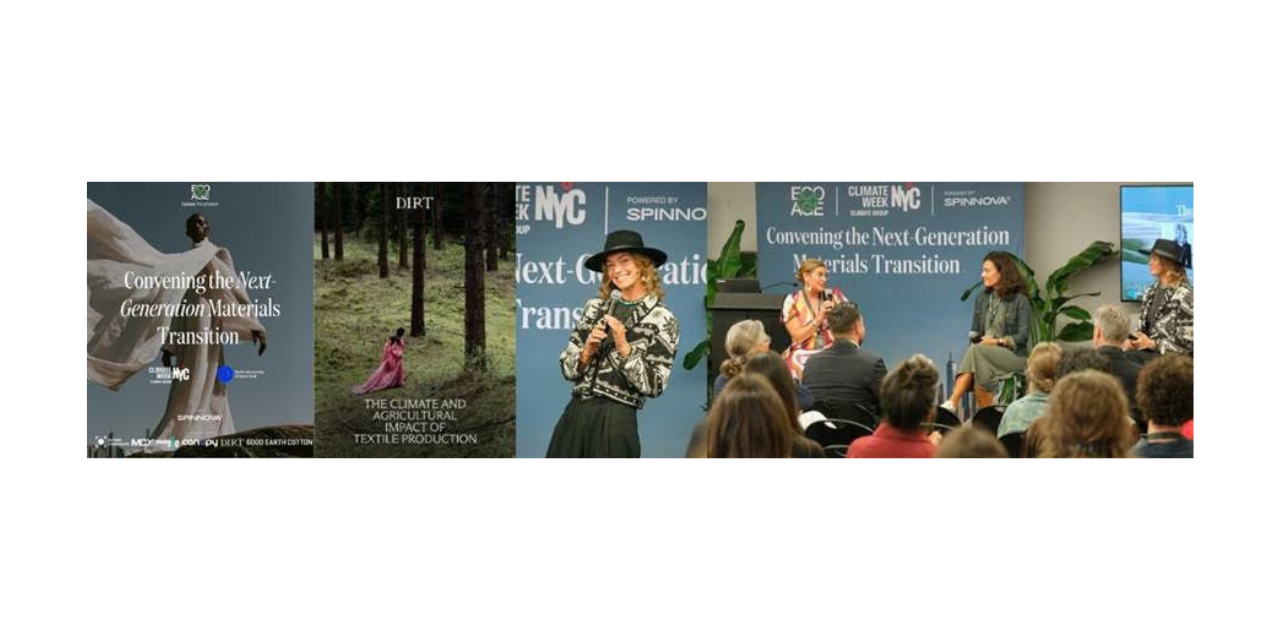
The findings were presented at the Next-Generation Materials Transition Forum.
Eco Age, a sustainable fashion consultancy, organised the forum as part of the official Climate Week NYC programme.
The event brought together around 250 senior leaders from major fashion and retail companies.
Attendees included representatives from Ralph Lauren, Hugo Boss, Calvin Klein, Tommy Hilfiger, Coach, Michael Kors, Tory Burch and J Crew.
Leaders from Adidas, Macy’s, Canada Goose, Victoria’s Secret, Lululemon, Banana Republic, Zara and American Eagle Outfitters also attended.
Fashion’s Material Choices Create a Major Land Impact
Professor Sam Fankhauser, Director of the Smith School of Enterprise and the Environment at the University of Oxford, highlighted the scale of fashion’s agricultural footprint.
Professor Sam Fankhauser, Director of the Smith School of Enterprise and the Environment at the University of Oxford, said: “Once leather and wool are counted alongside textile crops, roughly a third of the world’s agricultural land is linked to what this industry buys.”
The research places greater focus on the connection between fashion sourcing and agricultural land use.
It also highlights the potential role of material innovation in reducing environmental pressures.
Next-Generation Materials Gain Momentum
The forum explored the development and commercialisation of next-generation materials.
Participants included Canopy, Global Standards, Material ConneXion, Fashion for Good and Spinnova.
Fashion for Good forecasts that next-generation materials could grow significantly by 2030.
The organisation expects materials such as Spinnova’s cellulose fibre, made from wood pulp, could grow eightfold.
Such materials could account for around 8% of the global fibre market by 2030, according to the organisation’s projections.
Separate research has suggested that scaling these innovations could contribute 39% of the emissions reductions required for the fashion industry to reach net zero.
Industry Leaders Call for Material Innovation
Mikko Lassila, Chief Commercial Officer of Spinnova, highlighted the need to move emerging technologies towards commercial scale.
Mikko Lassila, Chief Commercial Officer of Spinnova, said: “There has never been a more important moment to discuss the scale-up of next-generation material solutions. After years of innovation and development, many breakthrough technologies are reaching a level of maturity where industrial scale is finally within reach. Rooms like this are where next-gen materials can move from potential to meaningful scale.”
The discussion focused on turning material innovation into commercially viable solutions.
It also reflected growing industry interest in alternatives to conventional raw materials.
Regenerative Agriculture Enters the Fashion Conversation
The forum also examined regenerative approaches to fibre production.
Arizona Muse, model and Founder of DIRT Charity, highlighted the potential of regenerative farming within fashion’s supply chains.
Arizona Muse, Founder of DIRT Charity, said: “Fashion, as a sourcing power, has the opportunity to regenerate up to 30% of earth’s agricultural land through transitioning to regeneratively farmed biodynamic fibre. Healing the surface of the earth from toxic pollution while clothing humans.”
The discussion places agricultural practices alongside material innovation in the industry’s sustainability agenda.
As brands examine their environmental impact, the findings underline the connection between fashion, raw materials and land use.
A Growing Focus on the Fashion Supply Chain
The Oxford research adds a new dimension to discussions around fashion’s environmental footprint.
Leather, wool and cotton form major parts of the agricultural land linked to fashion production.
At the same time, next-generation fibres and regenerative agriculture are emerging as areas of industry development.
The discussions at New York Climate Week highlighted the need for collaboration across brands, material innovators, researchers and supply-chain partners.