Moto Guzzi Unveils Transformed Headquarters in Mandello del Lario
Designed by architect Greg Lynn, the renewed complex brings together manufacturing, heritage, museum spaces, hospitality and contemporary exhibition design.
A New Chapter for Moto Guzzi
Moto Guzzi has begun a new chapter with the transformation of its historic headquarters in Mandello del Lario, Italy. Founded in 1921, the motorcycle brand remains deeply connected to its local roots, while the newly developed complex creates a future-focused home where manufacturing, heritage and brand identity converge.
Designed by American architect Greg Lynn, the project goes beyond the renovation of a historic factory. The factory, museum, event spaces, archives, hospitality areas and visitor facilities have been brought together to create a multifunctional industrial and cultural hub for enthusiasts and visitors from around the world.
The iconic red gate on Via Parodi, a symbol of more than a century of Moto Guzzi history, now provides entry to a radically transformed complex that retains the character of the original site while presenting the brand through a contemporary architectural language.
Architecture Inspired by Moto Guzzi
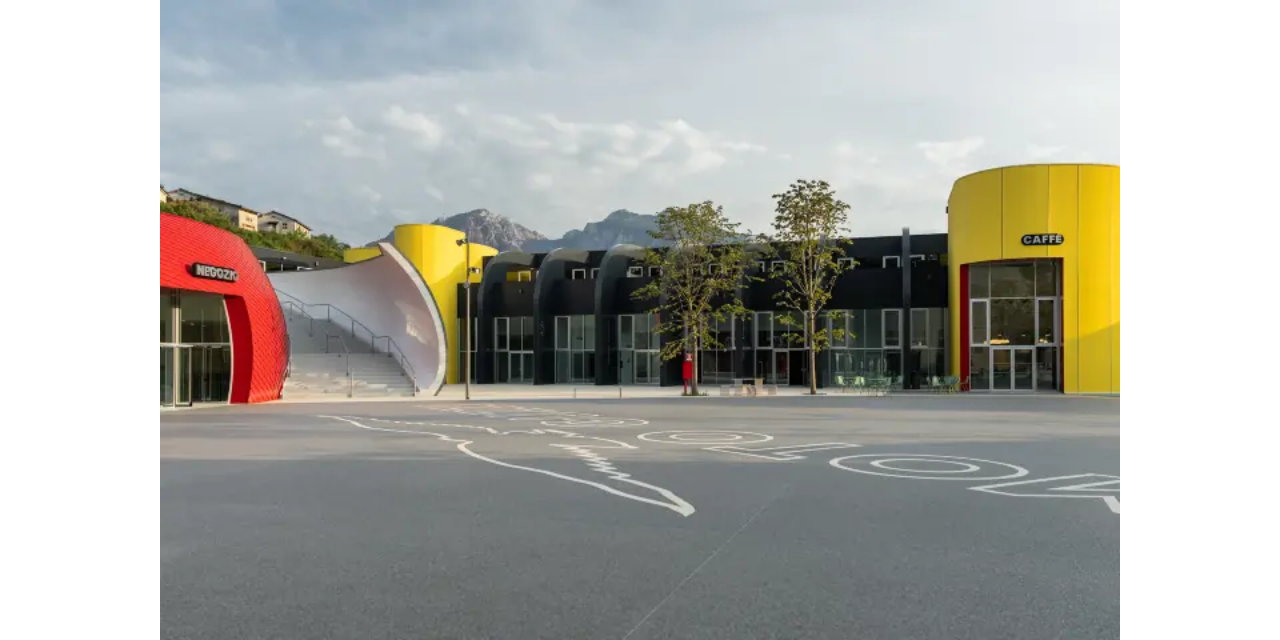
Set between the Prealps and Lake Como, the redesigned headquarters reorganises the original site by establishing connections between historic buildings and new structures, manufacturing areas and spaces accessible to the public.
At the centre of the complex, a large piazza serves as a focal point, linking its different functions and creating a new relationship between visitors, cultural spaces and contemporary production.
The architecture draws inspiration from the technical and metallic character of Moto Guzzi motorcycles. Their forms, materials and finishes are translated into the scale of the buildings, while recognisable elements of the historic site have been retained.
Inside the museum, conical structures featuring large oculi reference elements of the original buildings and echo the rocky forms of the surrounding mountains. Natural light from the Prealps and the lake filters into the exhibition spaces, contributing to an open and communal atmosphere.
UniFor Creates Bespoke Museum Design
Within the new museum, UniFor developed a fully bespoke exhibition design intended to translate Moto Guzzi’s heritage and identity into a flexible contemporary display system.
The project covered design development, engineering and production, resulting in a wide range of custom solutions integrated into the architecture. These include platforms and plinths in different shapes and sizes for motorcycles, alongside showcases, displays and supports for memorabilia, accessories, clothing and scale models.
Elements from the X Shelving system, designed by Foster + Partners, and the CF system, designed by architect Dante Bonuccelli, provide dedicated structures for the helmet collection and archive materials.
Metal structures, aluminium shelves and surfaces finished in textured cement-effect resin reinforce the visual connection between the exhibition interiors, the technical character of the architecture and Moto Guzzi’s industrial heritage.
More Than 160 Motorcycles on Display
The museum brings together more than 160 motorcycles, spanning the history of the brand from the G.P. prototype that marked its beginnings to contemporary models.
The collection also includes racing motorcycles and examples that illustrate changes in society, lifestyles, technology and design over the decades.
UniFor’s exhibition systems are designed to support this historical narrative without competing with the motorcycles and objects themselves. Their flexible infrastructure allows the museum to accommodate collections, documents and a wide variety of content.
Hospitality and Visitor Spaces
The design extends beyond the museum into hospitality and visitor-service areas. UniFor has created furnishings for the café and merchandising area, as well as the checkout counter and the space dedicated to the Registro Storico, Moto Guzzi’s historic register.
In the lounge areas, elements from the PRINCIPLES collection, designed by OMA, provide spaces for visitors to pause, meet and interact.
Operational areas feature LessLess tables, drawer units and cabinets designed by Jean Nouvel. In waiting areas, Paul sofas designed by Vincent Van Duysen for Molteni&C add another contribution from the Molteni Group portfolio.
The project also includes dedicated spaces for photographic archives and prototype preservation, supported by bespoke systems developed by UniFor.
Preserving Heritage While Looking Ahead
The renewed Moto Guzzi complex brings together architecture, industrial culture and exhibition design in a unified experience. Through its collaboration with Greg Lynn Form and the client, UniFor has contributed to the creation of a destination that preserves the heritage of one of international motorcycling’s historic names while opening its story to future generations.