Embroidered Denim Market to Reach USD 7.3 Billion by 2034
Personalisation, heritage craftsmanship, technological advancements and sustainability are driving growth in the global embroidered denim market.
The global embroidered denim market is projected to grow from USD 4.4 billion in 2025 to approximately USD 7.3 billion by 2034, registering a compound annual growth rate (CAGR) of 5.8% during the forecast period from 2026 to 2034, according to research by Growth Market Reports.
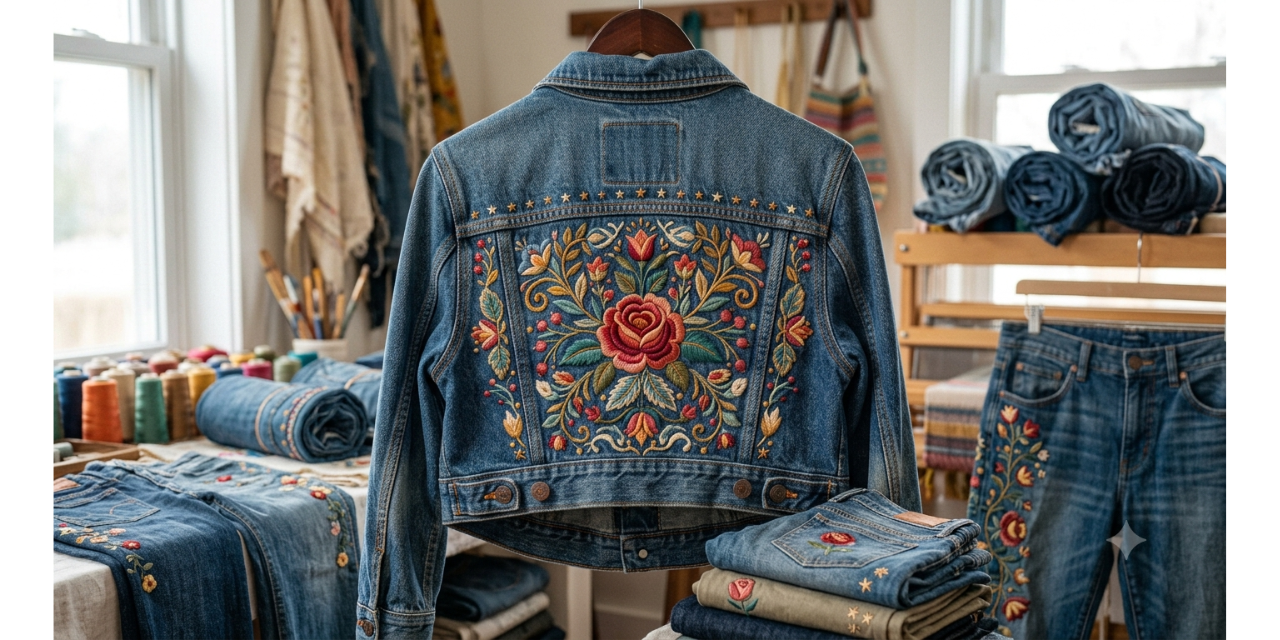
Embroidered denim is evolving from a niche fashion category into a distinctive segment of the global apparel industry. Combining the durability and versatility of denim with decorative stitching, artistic motifs, lettering, patterns and personalised details, the category enables brands to transform everyday jeans, jackets, shirts, skirts and other garments into more expressive fashion pieces.
The market’s growth is being supported by the resurgence of retro and heritage fashion, rising consumer demand for personalised apparel and advancements in textile manufacturing technologies. The increasing preference for sustainable and premium denim is also creating new opportunities for embroidered denim brands and manufacturers.
Personalisation Drives Consumer Interest
One of the strongest growth drivers is the rising demand for personalised apparel. Consumers are increasingly seeking clothing that reflects individuality rather than standardised designs. Embroidery enables brands to offer distinctive motifs, initials, cultural patterns and artistic graphics.
The trend is particularly significant among younger consumers, who increasingly discover fashion through social media and digital platforms. Influencer styling, social content and limited-edition collections can quickly generate interest in distinctive embroidered denim designs.
Heritage Craft Meets Contemporary Denim
The growing intersection of traditional craftsmanship and contemporary fashion is also contributing to the category’s expansion. Designers are incorporating techniques such as floral embroidery, kantha-inspired stitching, zardozi and other decorative traditions into modern denim silhouettes.
This fusion allows brands to differentiate their collections while providing traditional craftsmanship with a contemporary and accessible application. Indian embroidery techniques, in particular, are being explored through modern denim collaborations and collections that combine heritage with everyday fashion.
Technology Improves Production Flexibility
Advancements in embroidery technology are enabling manufacturers to produce increasingly detailed designs with greater consistency. Computer-aided design systems and automated embroidery equipment allow intricate patterns to be developed and reproduced efficiently across both large-scale collections and smaller personalised orders.
Manufacturers can experiment with thread colours, stitch densities, placement techniques and design sizes without completely redesigning the underlying garment. This flexibility is particularly valuable as fashion cycles become shorter and consumers expect more frequent product refreshes.
Sustainability Creates New Opportunities
Sustainability is becoming an increasingly important consideration within the embroidered denim market. Consumers are paying greater attention to material sourcing, manufacturing processes, garment durability and the environmental impact of fashion.
In response, brands are exploring organic cotton, recycled fibres, responsible threads, lower-impact dyes and more efficient manufacturing processes. Embroidery can also enhance the perceived uniqueness and longevity of a garment when designs are positioned as distinctive, enduring elements rather than disposable seasonal decorations.
Challenges Facing the Market
Despite positive growth prospects, embroidered denim manufacturers face several challenges. Rapid changes in fashion preferences can create inventory risks, particularly for heavily embellished products. Detailed embroidery can also increase manufacturing complexity, labour requirements and production costs.
Competition from fast-fashion brands presents another challenge, as companies capable of rapidly reproducing popular designs can place pressure on independent and premium brands. Sustainability expectations, fluctuations in raw-material prices and supply-chain uncertainty may further affect margins and production planning.
Competitive Landscape
Key companies identified in the embroidered denim market include:
- Levi Strauss & Co.
- VF Corporation, including Wrangler and Lee
- Diesel S.p.A.
- Guess, Inc.
- Gap Inc.
- PVH Corp., including Tommy Hilfiger and Calvin Klein
- H&M Group
- Inditex, including Zara
- American Eagle Outfitters, Inc.
- Kontoor Brands, Inc.
Future Outlook
The future of the embroidered denim market is expected to centre on personalisation, craftsmanship, sustainable production and creative design. Rather than treating embroidery solely as a decorative addition, fashion companies are increasingly using it as a tool for storytelling and product differentiation.
As consumers continue to seek distinctive clothing and designers experiment with heritage techniques and contemporary silhouettes, embroidered denim is positioned to become an increasingly visible segment of the global fashion and apparel market.
Source: Growth Market Reports