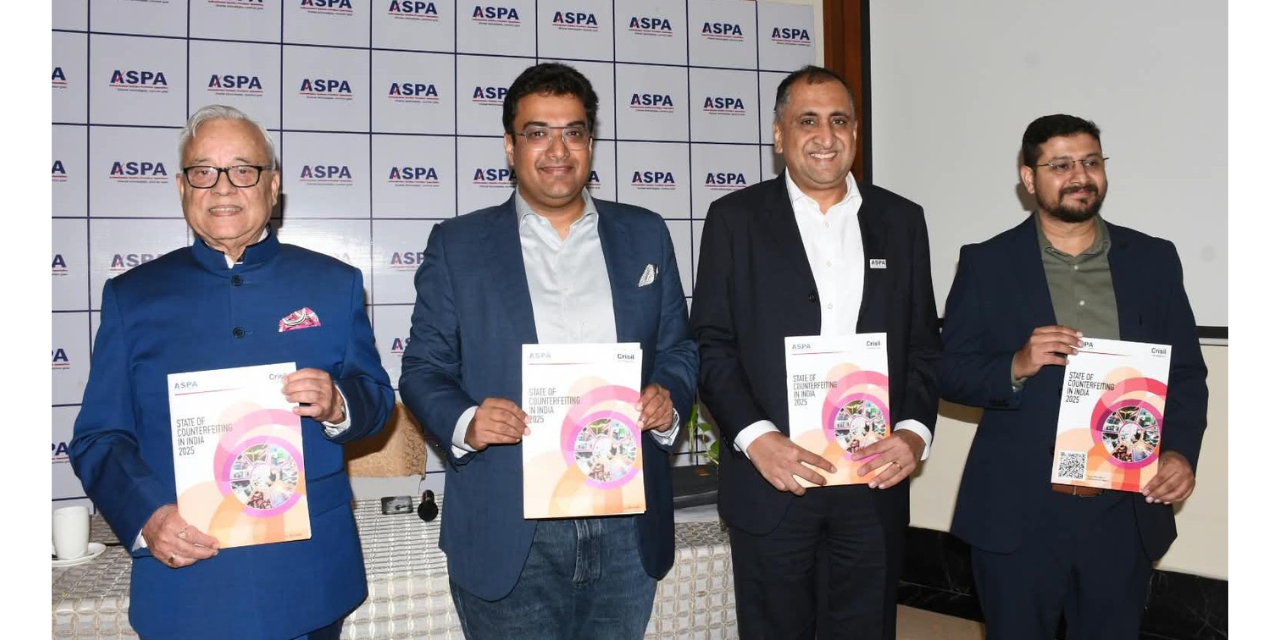
A new ASPA–CRISIL State of Counterfeiting in India 2025 report has highlighted the scale of counterfeit products in India. According to the study, 89% of consumers surveyed have purchased a counterfeit product at least once in their lifetime.
The Authentication Solution Providers’ Association (ASPA) presented the findings at its Fake Free India event in Hyderabad. The nationwide study surveyed 1,639 consumers across nine cities. It covered six sectors: apparel, FMCG, automotive parts, consumer durables, healthcare products and agro-products.
Counterfeit Products Remain Widespread
The report found that 35% of respondents encountered a counterfeit product in the past 12 months. Consumers also estimated that nearly 29% of products in local markets could be counterfeit.
Furthermore, 74% of respondents believed counterfeiting had increased in their region over the previous year.
However, the study also points to growing consumer awareness. Half of those surveyed said they would never knowingly purchase a counterfeit product. This marks an improvement over the report’s 2022 baseline.
In addition, 93% of respondents called for greater consumer awareness campaigns.
Apparel Records the Highest Perceived Counterfeit Rate
The study found counterfeit products across all six sectors. Apparel recorded the highest perceived prevalence at 34%, followed by consumer electronics at 31% and healthcare products at 28%.
The other sectors recorded the following figures:
- FMCG: 25%
- Agrochemicals: 23%
- Automotive parts: 22%
These findings show that counterfeiting affects a wide range of everyday purchases. It is not limited to one product category or industry.
Hyderabad Leads in Consumer Encounters
Regional data also highlights the scale of the problem. Hyderabad recorded the highest share of consumers who encountered counterfeit products in the past year, at 46%, among the nine cities surveyed.
Chennai followed at 39%, while Bengaluru recorded 33%. These figures point to significant concerns across major South Indian markets.
Consumers Need Better Ways to Verify Products
Although 62% of consumers said they now check product authenticity before purchasing, their verification methods differ.
The report found that:
- 34% check holograms.
- 23% use QR codes.
- 13% check digital identities.
Meanwhile, between 59% and 66% of consumers still rely mainly on packaging quality and brand presentation to judge whether a product is genuine.
ASPA believes this gap highlights the need for better consumer education. In particular, consumers need greater awareness of modern authentication and traceability technologies.
Solutions such as secure packaging, product serialization, QR-based verification and track-and-trace systems can help consumers verify products more reliably. They can also improve visibility across the supply chain.
ASPA Calls for Greater Industry Collaboration
Ankit Gupta, President, ASPA, said counterfeiting has become part of everyday consumer experience across multiple sectors. He called for stronger collaboration between brands, regulators and consumers to improve authentication and consumer confidence.
Nakul Pasricha, Vice-President, ASPA, highlighted authentication and traceability as important tools for closing the gap between consumer awareness and actual product verification. He also advocated solutions that consumers can access and use easily.
Meanwhile, Prof. Bejon Kumar Misra, International Consumer Policy Expert & Honorary Member, ASPA, described counterfeiting as a consumer protection issue. He said it extends beyond intellectual property and brand concerns.
He called for simple, accessible and affordable ways for consumers to identify, verify and report suspicious products.
Fake Free India Campaign to Expand
The ASPA–CRISIL State of Counterfeiting in India 2025 report forms part of ASPA’s ongoing work in Awareness, Advocacy, Research and Innovation.
The association is also expanding its Fake Free India campaign across the country. Through this initiative, ASPA aims to increase public understanding of counterfeiting and promote stronger product authentication.