Tanvi Munjal
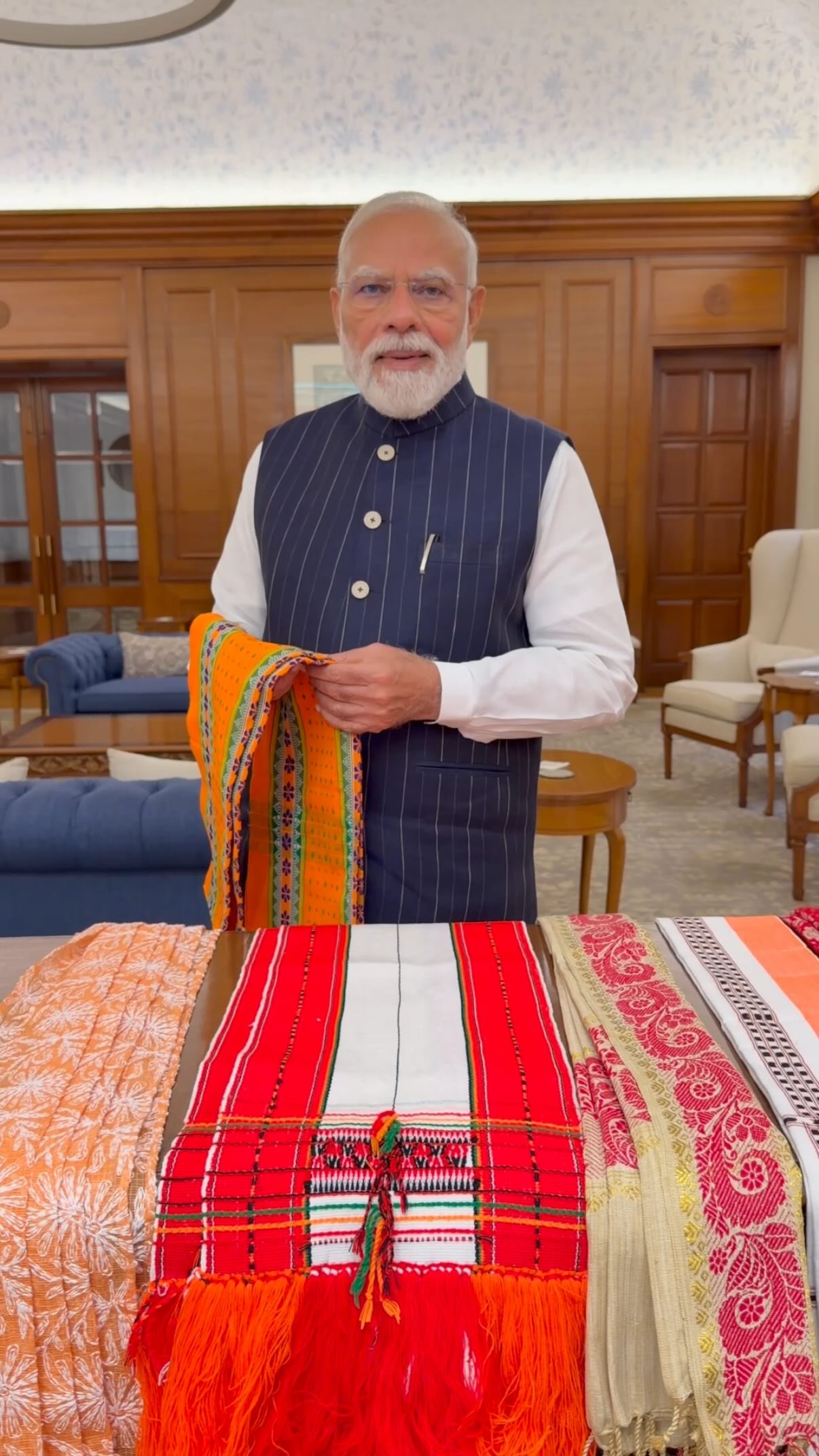
Photo Credit: @narendramodi (Instagram)
What happens when a centuries-old handloom tradition meets one of the internet’s most popular content trends?
You get a saree being styled for a GRWM video.
This National Handloom Day, Prime Minister Narendra Modi has encouraged citizens to do exactly that. He has urged people to create “Get Ready With Me” (GRWM) videos featuring their favourite handloom outfits and products, share them on social media, and use the hashtag #NationalHandloomDay.
At first glance, it may look like just another social media campaign. But there is something much bigger happening here.
For an industry that has spent years trying to make handloom more visible to younger consumers, taking the story to Instagram Reels, YouTube Shorts and other digital platforms could be a meaningful change in how India’s traditional textiles are presented to the next generation.
From the Loom to the Feed
Handloom has never really had a problem with its story. Every weave has one. A place, a community, a technique, a family and generations of knowledge behind it. The challenge has been getting people, particularly younger consumers, to notice that story.
That is where the GRWM format becomes interesting.
GRWM videos are already part of everyday digital culture. People use them to show what they are wearing, how they style an outfit, what they are buying and, increasingly, what their personal style says about them.
Now imagine that morning routine featuring a Kanchipuram saree, a Chanderi dupatta, an Assamese mekhela chador, an Ikat outfit or a handwoven stole.
The handloom product is no longer being introduced as something that belongs only to a museum, a craft exhibition or a traditional occasion. It becomes part of someone’s everyday wardrobe.
And that difference matters.
Instead of telling young consumers that they should appreciate handloom because it is India’s heritage, the campaign gives them another reason to engage with it: because it looks good, feels personal and works with their style.
Why Gen Z Matters
For the handloom sector, Gen Z is not simply another consumer group. It is the generation helping decide what becomes visible, desirable and culturally relevant online.
They discover brands through creators. They find styling inspiration through short videos. They often look at what people around them are wearing before they look at a conventional advertisement.
That makes the GRWM format a natural fit.
A young creator choosing handloom for a video is doing something very different from a conventional government advertisement featuring a weaver. The message is no longer, “This is an important Indian tradition.”
It becomes, “This is what I am wearing.” That small shift can change how the product is perceived.
And Gen Z does not necessarily see a divide between traditional and modern fashion. A handloom saree can be paired with sneakers. A traditional textile can become a co-ord set. A handwoven dupatta can be styled with denim. The weave stays traditional, but the way it is worn keeps evolving.
That is where handloom has an opportunity.
Turning Visibility Into Demand
Behind all of this is a much more serious economic story.
India’s handloom sector supports millions of livelihoods, with women making up a significant share of its workforce. For countless weaving families, the survival of a craft is closely linked to whether there is a market willing to pay for it.
The sector has faced competition from mass-produced textiles, inexpensive alternatives and changing consumer preferences for years.
So visibility is not a superficial concern.
If more people see handloom, more people may become curious about it. If curiosity turns into purchase, it creates demand. And sustained demand can mean more work and more stable income for weavers and the communities around them.
Of course, a viral video alone cannot solve the structural challenges facing handloom. But it can help solve one of the industry’s most persistent problems: being seen.
A New-Age Take on Swadeshi
There is also a powerful historical connection behind the timing.
National Handloom Day is observed on August 7 to commemorate the launch of the Swadeshi Movement on August 7, 1905. The movement encouraged Indians to support indigenous products and industries at a time when imported goods dominated the market.
More than a century later, the landscape is completely different.
There are no streets filled with Swadeshi protests. Instead, there are smartphones, creators, reels, hashtags and millions of digital conversations taking place every day.
But the underlying idea of supporting Indian-made products remains. The marketplace has changed. The message has found a new medium.
From “Vocal for Local” to “Wear Local”
This is perhaps where the #VocalForLocal message becomes more interesting.
People have heard calls to “buy local” many times. But today’s consumers, particularly younger ones, respond better when an idea becomes part of culture rather than a slogan.
A creator wearing a handloom outfit does not have to give a speech about supporting artisans.
The outfit itself starts the conversation. Someone asks where it is from. Someone else wants to know the name of the weave. Another person searches for the textile online. A small brand gets a new customer. A weaver’s work reaches someone who may never have walked into a handloom store.
That is how digital visibility can slowly travel down the value chain.
The World Is Watching Too
There is another opportunity here that should not be overlooked.
Social media does not stop at India’s borders.
A handloom outfit featured by an Indian creator can be seen by audiences in London, New York, Singapore, Dubai or Melbourne within minutes. For international consumers interested in Indian fashion, craft and sustainable textiles, this kind of content can provide a more authentic introduction than a conventional product advertisement.
For exporters, designers, handloom brands and artisan-led businesses, that presents an interesting possibility.
India’s handloom story can travel globally through people rather than just through products.
The Bigger Question for the Industry
The campaign is also a reminder to the textile industry that preserving tradition does not mean keeping it frozen in time.
A weave can remain traditional while its styling changes. A craft can retain its identity while finding new consumers. And a centuries-old textile can find a completely new audience through a 30-second video.
That is the opportunity handloom has today.
The Ministry of Textiles is also marking National Handloom Day with its 12th celebration at the Rashtrapati Bhavan Cultural Centre, including recognition of weavers through 22 awards, along with exhibitions and live demonstrations. The combination of formal recognition and digital participation puts both the people behind the craft and the craft itself in the spotlight.
But the real test will come after the hashtags stop trending.
Will consumers continue buying handloom? Will young people continue wearing it beyond August 7? Will brands invest in contemporary handloom products? And, most importantly, will the increased attention translate into better and more sustainable incomes for the people sitting behind the looms?
Those are the questions that matter.
Tradition Needs an Audience
Handloom does not need to become something it is not. It simply needs to be seen differently.
For years, the industry has often spoken about handloom through the language of heritage, preservation and tradition. All of that matters. But today’s consumer also wants style, individuality and relevance.
The GRWM approach brings those worlds together.
A young person putting together an outfit for Instagram may not think they are participating in the preservation of India’s textile heritage. They may simply think the outfit looks great.
And perhaps that is exactly the point. Tradition survives when people continue to use it, wear it, buy it and make space for it in their lives.
The handloom sector does not need sympathy. It needs consumers.
It needs visibility. It needs fair value for craftsmanship. It needs young people to see Indian textiles not as something belonging to the past, but as something they can confidently make their own.
This National Handloom Day, the loom has found its way onto the feed. The next challenge is making sure it stays there long after the trend is over.