
Dr Vidhu Sekhar P
Assistant Professor,
National Institute of Fashion Technology,
Department of Fashion Management Studies, Daman Campus
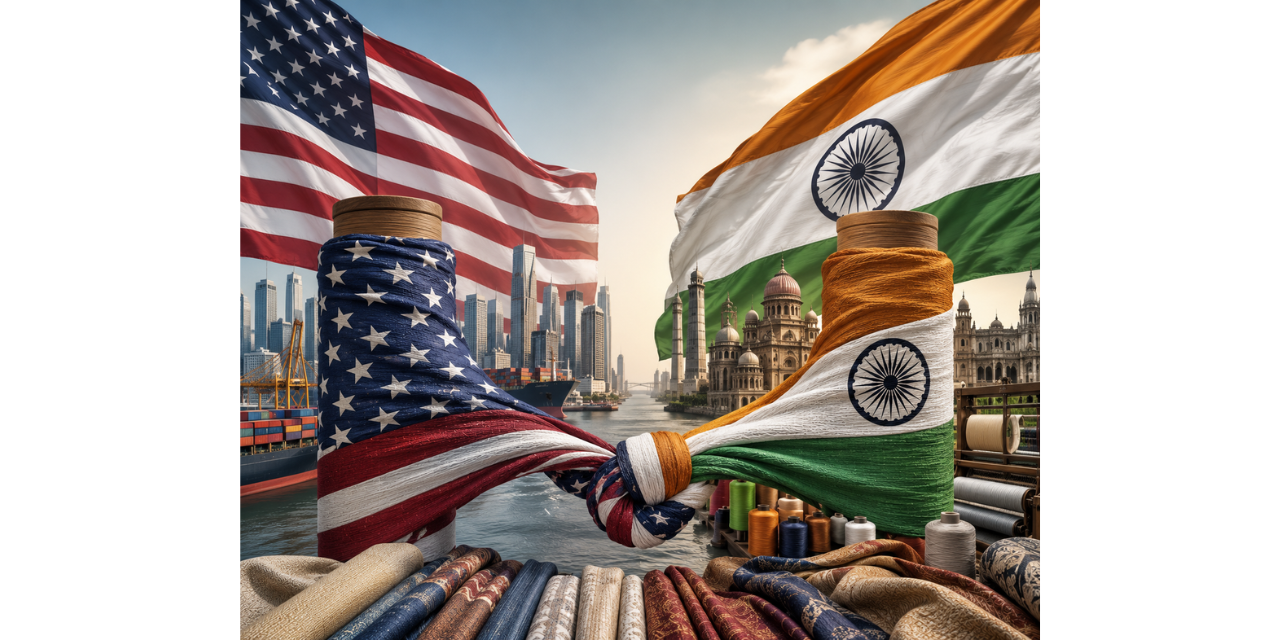
India and the US are negotiating a mini trade-like deal and a full bilateral Trade agreement from 2021. So far, the official record shows that five rounds of negotiations have already taken place till last month. Currently, the deal is struck on 3 issues, if classified broadly, into Agriculture/market access, Digital tax/e-commerce, Dairy, and medical devices tariffs. The discussion on Textile is broadly agreed, however, it is pending due to an overall deal.
As India is fast pushing other FTAs, the US seems to push the deal harder. They want to counter the Chinese attempt to secure the supply chains. We are moving faster and with caution because other FTAs are giving us an upper edge over the US in negotiations. We have closed FTAs with the UK, Australia, and the UAE. EFTA and EU talks are in the final lap. The day before, we have inked a Comprehensive Economic Partnership Agreement (CEPA) with Oman. Therefore, our policy makers are on strong foot, not to give concessions to the US that we did not give either to the UK or the EU.
Our policy is to proceed with FTAs with everyone, with clear geographical diversification. We have been aggressive in FTAs since 2023. We closed UAE CEPA 2022, Australia ECTA 2022, UK FTA 2026, EFTA TEPA 2024, and EU FTA, and Canada FTA is in the final stage. In spite of this, the US FTA still matters to us as their Textile and Apparel market is worth $45B. India has a very minimal share of 4-5% compared to Vietnam 15%, Bangladesh 9%. US tariff on Indian Garments stands at 12-16%, if it is removed upon the deal, Indian companies expect $ 5-7B export potential. If the deal is done, the US may not block us in the World Trade Organisation or other such forums, and it is a boost for Indian IT, pharma, and engineering goods.
The US wants sourcing beyond China, therefore the natural choice is India. What the US-India deal for the US is not just commercial but strategic. However, the demand of the US on opening dairy, agri, and GM crops is sensitive to our farmers and MSMEs’ stake can not be taken for granted. The US is hurrying to ink the deal fast due to the current geopolitical issues, and they want to decouple from China as fast as possible. Therefore, we remain as the largest democracy with a strong manufacturing base available. The US administration wishes to seal the deal before the 2028 presidential election. India’s other FTAs worry the US, as there is a fear of losing out in major Indian markets for agriculture, dairy, whisky, and engineering goods to UK, Australia, and EU exporters.
The bargaining power that we received in the UK, EU, and Australia deals made our stand stronger, and Commerce Minister Mr Piyush Goyal has made it very clear that we are fast but not desperate to have a deal and would not do FTA for FTA’s sake. The bottom line being the US needs India more today than India needs the US deal urgently.