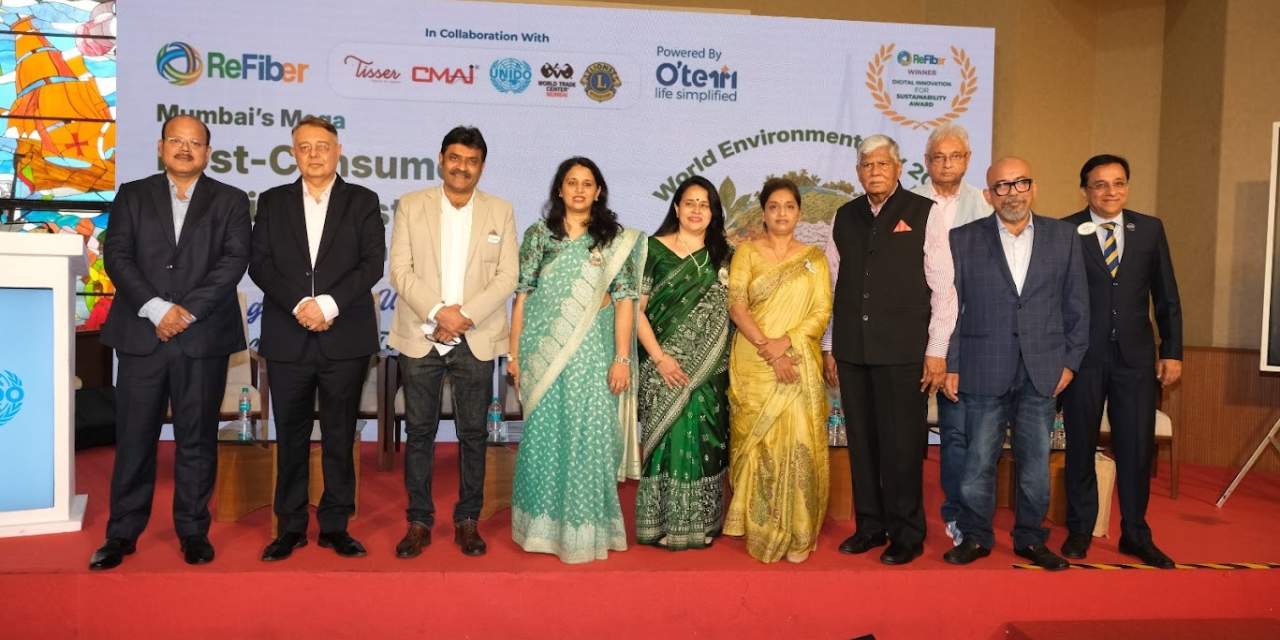
CMAI Leads Nationwide Circular Fashion Movement in India
The Clothing Manufacturers Association of India (CMAI), in collaboration with UNIDO, ReFiber, Oterri, Tisser, World Trade Center Mumbai, and Lions International, has launched the ‘Mega Used Clothes Upcyclon’, a nationwide initiative aimed at strengthening textile circularity and encouraging responsible consumer participation in waste reduction.
The programme was unveiled in Mumbai on World Environment Day (5 June 2026) as part of a broader effort to address post-consumer textile waste and promote sustainable practices across India’s apparel ecosystem.
Strengthening Post-Consumer Textile Circularity
The initiative focuses on improving the collection, reuse, and upcycling of used garments, addressing a critical gap in the textile value chain. Industry data highlights that more than half of textile waste originates after consumer use, while nearly two-thirds of discarded clothing ends up in landfills or open dumping sites. These figures underline the urgent need for structured collection systems and consumer-driven participation.
Consumer Participation at the Core
The Mega Used Clothes Upcyclon is designed to engage citizens directly in circular economy practices by encouraging responsible donation and recycling of used clothing. By extending garment lifecycles through reuse and upcycling, the initiative aims to reduce environmental impact while conserving natural resources.
Large-Scale Collection and Upcycling Goals
Supported by Tisser, an organisation working with over 20,000 women artisans, the campaign targets the collection of 20,000 kilograms of used clothing and household textiles. These materials will be channelled into upcycling and reuse processes, creating both environmental benefits and livelihood opportunities for women engaged in the textile value chain.
Building a Circular Ecosystem
According to CMAI President Santosh Katariya, consumer participation is essential for the success of India’s transition toward a circular textile economy. He emphasised that responsible consumption, donation, and reuse are key to reducing waste and extending product lifecycles.
CMAI Hon. Gen. Secretary and ESG Committee Chairman Naveen Sainani added that true circularity requires collaboration across consumers, recyclers, manufacturers, and collection networks. The initiative demonstrates how discarded garments can be transformed into economic, social, and environmental value.
Industry-Wide Collaboration for Sustainability
The campaign builds on CMAI’s ongoing sustainability efforts, including the ECO-STITCH Sustainability Conclave, which brought together global and domestic stakeholders to accelerate innovation and collaboration in textile sustainability.
With this initiative, CMAI aims to drive long-term behavioural change and strengthen India’s circular textile infrastructure by integrating consumer awareness with practical collection and upcycling systems.