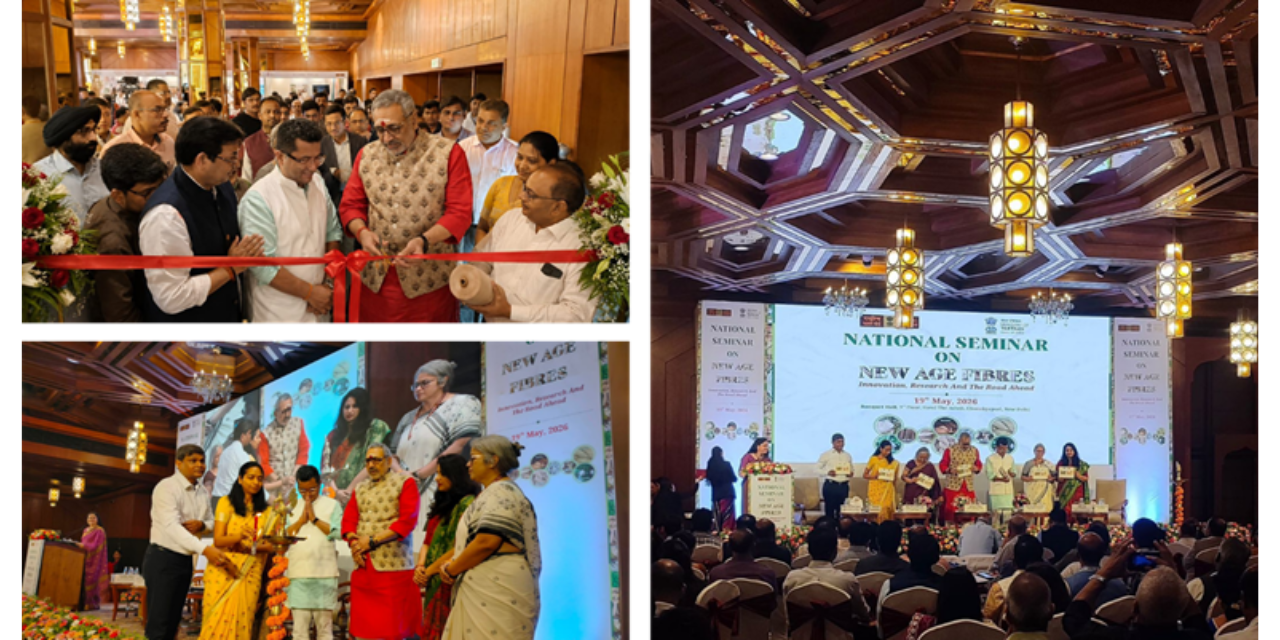
Giriraj Singh inaugurated the National Seminar on “New Age Fibres – Innovation, Research and the Road Ahead” in New Delhi, reinforcing the Government of India’s focus on sustainability, innovation, and self-reliance in the textile sector.
Organised by the Ministry of Textiles through the National Jute Board, the seminar brought together policymakers, industry leaders, researchers, startups, innovators, and academic institutions to discuss the future of sustainable fibre development in India.
The event was attended by Pabitra Margherita, Neelam Shami Rao, senior ministry officials, and stakeholders from across the textile value chain.
Addressing the gathering, Shri Giriraj Singh highlighted the strategic importance of new-age fibres in promoting sustainability, reducing environmental impact, and generating employment opportunities. He stated that these fibres would play a significant role in achieving the vision of Atmanirbhar Bharat while supporting India’s sustainability commitments. The Minister also announced that regular virtual meetings would be conducted with stakeholders to accelerate the development of the new-age fibre ecosystem.
The seminar focused extensively on emerging sustainable fibres including pineapple fibre, flax fibre, milkweed fibre, bamboo fibre, hemp fibre, nettle fibre, banana fibre, ramie fibre, and kapok fibre. These materials are increasingly being recognised for their biodegradable, eco-friendly, and versatile properties, with strong potential for agricultural diversification, rural livelihood generation, and value-added textile products.
The programme began with the inauguration of the “New Age Fibres Expo”, followed by an exhibition walkthrough showcasing innovative fibre-based technologies and sustainable textile applications. A key highlight of the event was the launch of the New Age Fibres booklet along with the release of detailed reports prepared by three dedicated Task Forces on fibre development.
In her keynote address, Mrs. Padmini Singla, Joint Secretary (Fibre), Ministry of Textiles, highlighted the growing global demand for biodegradable and environmentally responsible textile materials, while emphasising India’s opportunity to emerge as a major player in sustainable fibre innovation.
The seminar featured four thematic sessions addressing policy frameworks, entrepreneurship, technology challenges, and long-term strategic planning for new-age fibres.
The first session, moderated by Mrs. Vrunda Manohar Desai, Textile Commissioner, focused on building a structured framework for fibre development. Discussions covered resource availability, cultivation practices, processing technologies, institutional coordination, and the need for research-backed policy support.
The second session explored entrepreneurship and commercialisation opportunities within the sector, highlighting innovations in bamboo composites, banana fibre products, pineapple leaf fibre applications, flax and hemp textiles, and milkweed fibre innovations. Industry leaders emphasised the importance of startups, private investment, and market linkages in driving sectoral growth.
The third session examined techno-commercial challenges including fibre extraction technologies, machinery development, supply chain gaps, logistics, and quality consistency. Experts called for stronger collaboration between agriculture, textile, and industrial sectors to support scalable adoption.
The final session focused on a strategic roadmap for 2030, outlining the importance of policy support, processing infrastructure, standardisation, exports, sustainability frameworks, and branding initiatives aimed at positioning India as a global leader in sustainable textile innovation.
The recommendations and deliberations from the seminar are expected to contribute towards the development of a comprehensive New Age Fibre policy framework focused on innovation, research, resilient value chains, and enhanced global competitiveness for India’s sustainable textile sector.