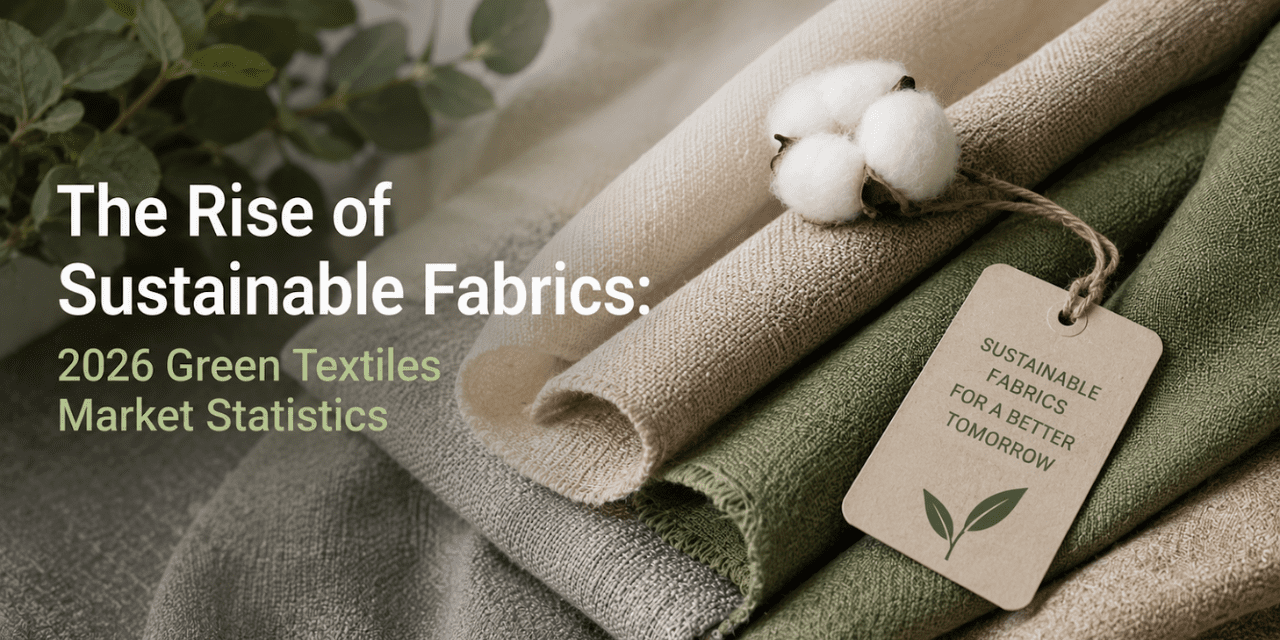
The global green textiles industry is witnessing significant growth as sustainability becomes a core focus for manufacturers, retailers, and consumers worldwide. According to industry insights highlighted by Dataintelo, the market was valued at USD 7.8 billion in 2024 and is projected to reach USD 15.4 billion by 2030, expanding at a CAGR of 11.9% between 2024 and 2030.
The growing adoption of eco-friendly fabrics is being driven by stricter environmental regulations, rising consumer awareness, and increasing investment in recycled and sustainable fibers. Recycled polyester currently accounts for nearly 38% of sustainable textile production, while the use of organic cotton increased by 24% between 2021 and 2025. Sustainable textiles are also helping reduce water consumption by up to 70% and lowering energy usage by approximately 30–45%.
Consumer preference for environmentally responsible fashion continues to rise, particularly among younger demographics. More than 62% of Gen Z consumers now prefer eco-friendly clothing brands, while companies adopting circular textile models have reported 18% higher customer retention rates. Biodegradable textiles made from bamboo, hemp, and algae-based fibers also recorded a 27% year-on-year increase in demand during 2025.
Asia-Pacific remains the leading textile manufacturing region, contributing over 42% of global textile output. Countries including India, China, and Bangladesh are significantly increasing investments in sustainable textile infrastructure and renewable-powered production facilities. India alone recorded an 18% rise in organic cotton exports in 2025 and has invested over USD 1.2 billion in sustainable textile technologies since 2022.
Technological advancements are further accelerating the sector’s growth. Modern dyeing technologies have reduced industrial water consumption from 150 litres per kilogram of fabric to nearly 45 litres in optimised facilities. Renewable-energy-powered factories are also achieving lower electricity costs, reduced carbon intensity, and improved operational efficiency. Digital textile printing has expanded rapidly as it consumes nearly 60% less water than traditional screen-printing methods.
Europe continues to lead in sustainability regulations, with eco-certified apparel sales rising by 31% between 2021 and 2025. The region’s stricter policies on fast-fashion waste and environmental compliance are encouraging manufacturers to transition towards low-emission and resource-efficient production systems.
Looking ahead, sustainable textiles are expected to account for 25–30% of total global textile sales by 2030. Industry experts also anticipate significant growth in carbon-neutral factories, AI-driven manufacturing optimisation, and waterless dyeing technologies, all of which are expected to further reduce waste and environmental impact across the textile value chain.
Read A Full Report: https://dataintelo.com/report/green-textiles-market