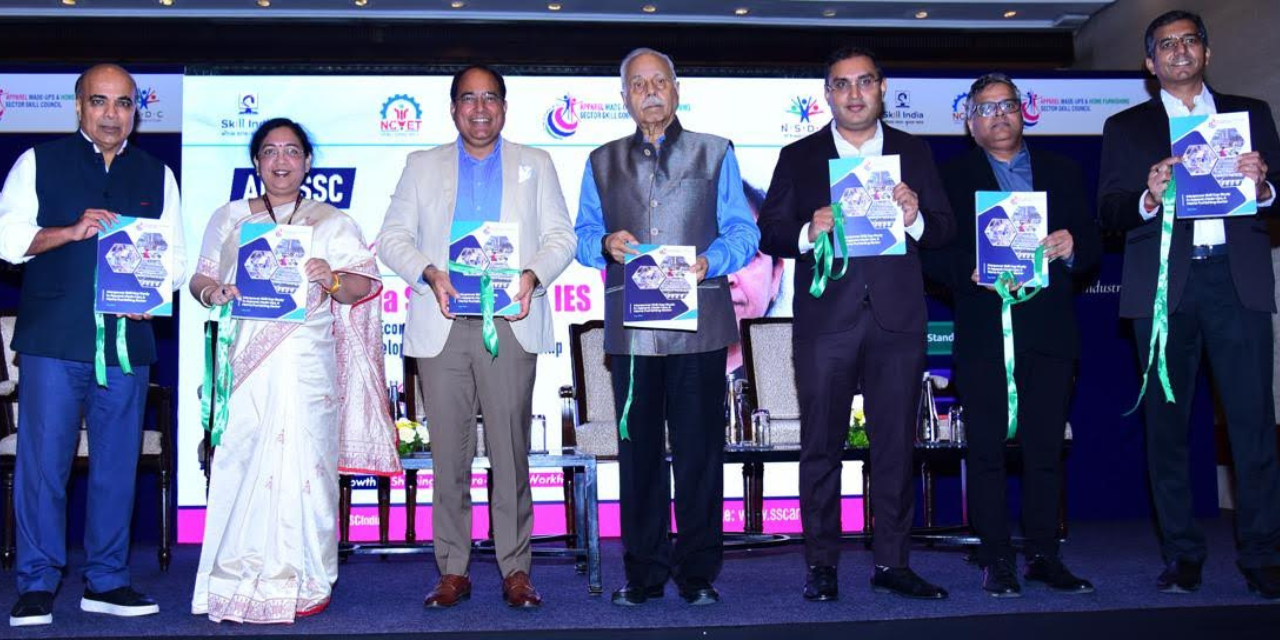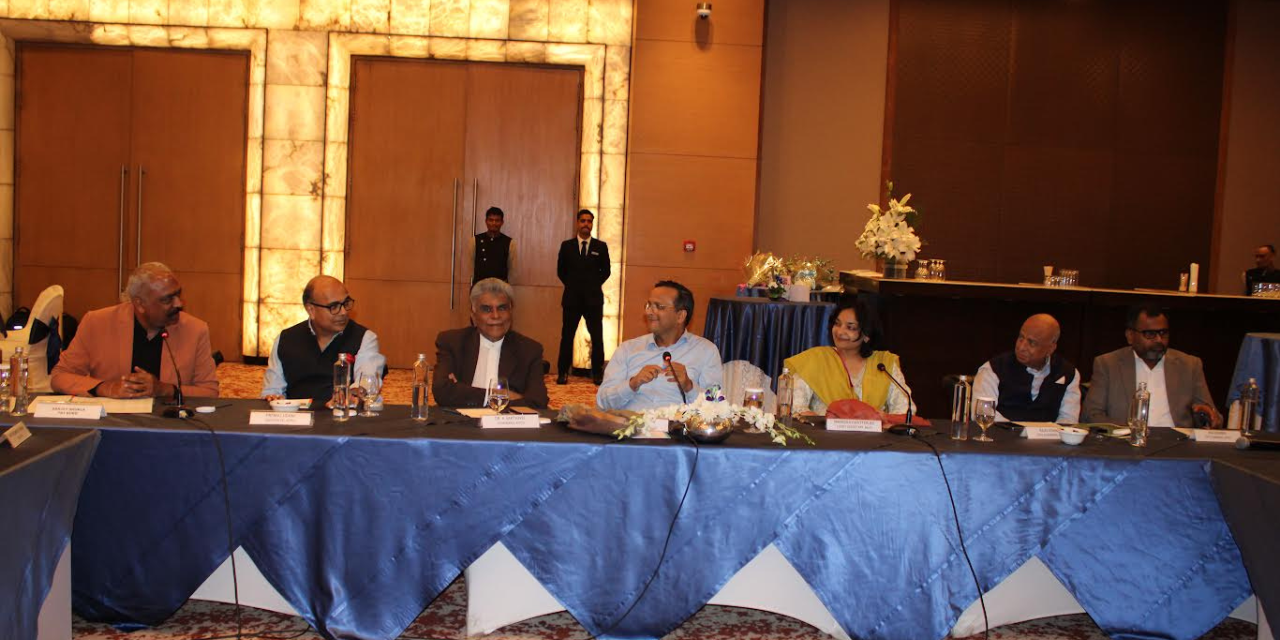
Apparel Export Promotion Council (AEPC) convened a high-level roundtable on evolving global trade dynamics at Le Meridien New Delhi, bringing together senior government officials, industry leaders, buyers, and exporters to discuss the future of India’s apparel exports.
The session was attended by Chief Guest Lav Agarwal, Director General of Foreign Trade, Ministry of Commerce, Government of India, and Guest of Honour Manisha Chatterjee. The discussions focused on leveraging Free Trade Agreements (FTAs), strengthening supply chains, and scaling India’s global competitiveness.
AEPC Chairman A Sakthivel highlighted India’s significant progress in securing FTAs with countries covering nearly 60% of the global population, offering duty-free access to key apparel markets. However, he noted that exports have remained around USD 17 billion for nearly a decade and urged the industry to work towards the USD 40 billion target by 2030. “The government has shown the way, and buyers are already visiting factories and assessing capacities. Now it is our part to assure the government and the buying fraternity that we will deliver,” Dr. Sakthivel said.
Delivering the keynote address, Mr. Lav Agarwal emphasised the resilience of India’s apparel sector amid global challenges such as tariffs, supply chain disruptions, and geopolitical uncertainties. He described FTAs as a transformative opportunity and outlined key priorities for the sector. “Every sixth person in the world is Indian. By that numerical strength alone, we should be preparing a strategy that one-sixth of the global trade should be with us in every sector,” he remarked.
Ms. Manisha Chatterjee stressed the importance of industry collaboration and policy alignment, particularly in the man-made fibre (MMF) segment. She underscored the need to meet global benchmarks in quality and sustainability. “Europe and Japan are very particular about quality and sustainability. To capture these markets, we must work harder to meet their expectations,” she said. She also highlighted ongoing government consultations and encouraged industry participation in shaping future policies. “Your inputs are extremely valuable. Together, we can ensure that India’s apparel exports reach new heights,” she affirmed.
Industry stakeholders and buying houses shared critical insights on the need to rebalance India’s fibre mix towards MMF, expand manufacturing capacity, and improve supply chain efficiency. Participants emphasised the importance of skill development, compliance standards, and faster turnaround times to meet global buyer expectations.
Concerns around MMF and polyester supply chains were highlighted, along with the need for advanced machinery, improved financing mechanisms, and stronger support for small and mid-sized exporters. Industry voices also pointed to India’s strong fabric capabilities but noted gaps in global marketing and brand visibility.
The roundtable concluded with a unified commitment from government, exporters, and buyers to strengthen Brand India, enhance sustainability, and scale production capabilities, positioning India as a reliable and competitive global sourcing destination.