

Kauvery Hospital, Vadapalani, successfully treated a 60-year-old woman with a rare pancreatic tumour called an insulinoma. The tumour caused repeated episodes of low blood sugar and loss of consciousness. After routine scans failed to locate it, specialised tests helped doctors identify the tumour.
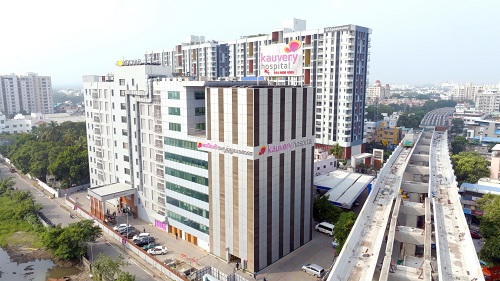 |
Kauvery Hospital, Vadapalani
Specialised Tests Help Locate the Tumour
The hospital followed a step-by-step approach to diagnose the condition. First, doctors performed a contrast CT scan and a specialised PET scan. However, neither scan clearly showed the cause.
Further blood tests measured the patient’s insulin and C-peptide levels. These tests helped doctors investigate the cause of her low blood sugar. Next, a targeted endoscopic ultrasound (EUS) helped locate the tumour.
Robotic Surgery Helps Remove the 1.3 cm Tumour
The tumour measured just 1.3 cm and was located at the neck of the pancreas. Its position near vital structures made the surgery more complex.
Therefore, the surgical team chose a robotic-assisted procedure. They also used robotic intraoperative ultrasound (RIOUS) to locate the tumour during surgery. This helped the team remove it with greater precision.
Patient Recovers After Successful Surgery
The surgery was successful. The patient’s blood sugar levels began to normalise immediately after the procedure. She also recovered quickly and returned to her normal activities the next day.
Dr. P. Basumani, Senior Consultant and Director, Kauvery Institute of Digestive Sciences, Kauvery Hospital, Vadapalani, led the diagnostic team. Meanwhile, Dr. Swaminathan Sambandam, Senior Consultant and Lead, Multi-Organ Transplant (Liver, Kidney, Pancreas and Small Intestine), performed the robotic procedure.
Doctors Highlight the Role of Advanced Technology
Dr. P. Basumani said, “Insulinomas are extremely difficult to locate, especially when they are very small. In this case, even advanced imaging did not give us clear answers. Specialised blood tests combined with focused Endoscopic Ultrasound Evaluation helped us precisely identify the tumour.”
Dr. Swaminathan Sambandam said, “This was a technically demanding surgery. Tumours of this size and location are extremely challenging to operate on through conventional methods. Robotic surgery, supported by intraoperative ultrasound, gave us unmatched precision and control. Very few hospitals in the country have access to this level of technology.”
Dr. Aravindan Selvaraj, Co-founder and Executive Director, Kauvery Group of Hospitals, said, “This case reflects the strength of clinical teamwork, perseverance in diagnosis, and the role of advanced technology in handling rare pancreatic and endocrine tumours. It reinforces Kauvery Hospital’s commitment to clinical excellence, advanced diagnostics and state-of-the-art robotic surgery.”


