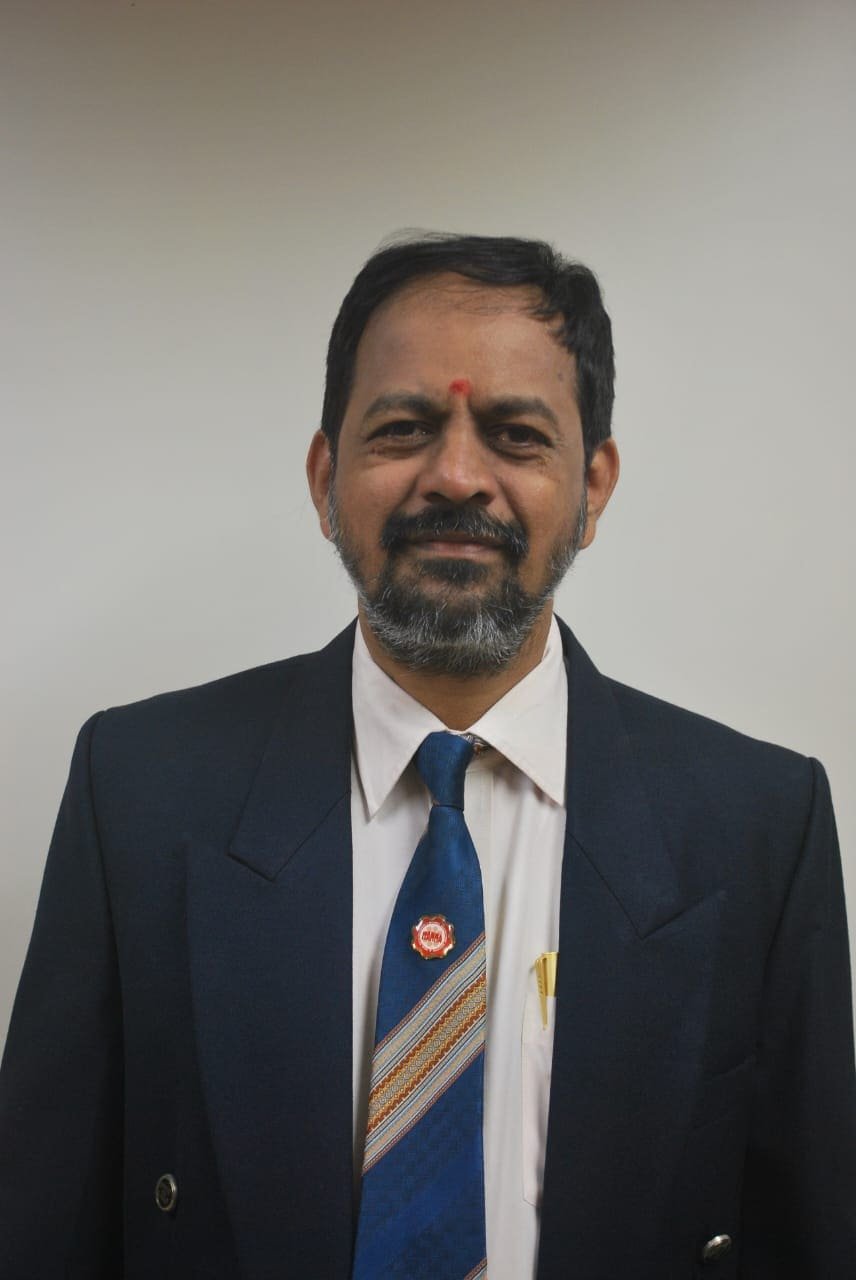
Nishant Dattatray Mhatre,
Managing Trustee & Chairman,
Leela Mhatre Pratisthan
Nishant is a classic case of going beyond the call of duty. He has been working on the development of a low-cost handloom that can be operated by a disabled person. Development work was carried out at BTRA from August 2003 to May 2004.
Nishant’s rationale was simple: though handloom machines had been undergoing regular modifications towards increasing productivity and improving the quality of fabric produced, the concept of a disabled person operating such machines was unheard of. He realised that, in order to provide employment to disabled people, it was essential that they be operated without electricity, always in a short or no supply in semi-urban or rural areas.
This also complemented the fact that, since the operation was to be completely powered by humans, the chance of accidents would be minimised.
After the development of the prototype, Nishant demonstrated precise productivity levels and earning potential for people with different kinds of disabilities with trials at the Vocational Rehabilitation Center for disabled people in Mumbai.
His pioneering work and lead role in the project culminated in the demonstration of the Working Model on 19th August, and its display at the Samarthaya 2004 Exhibition at Patna in October.
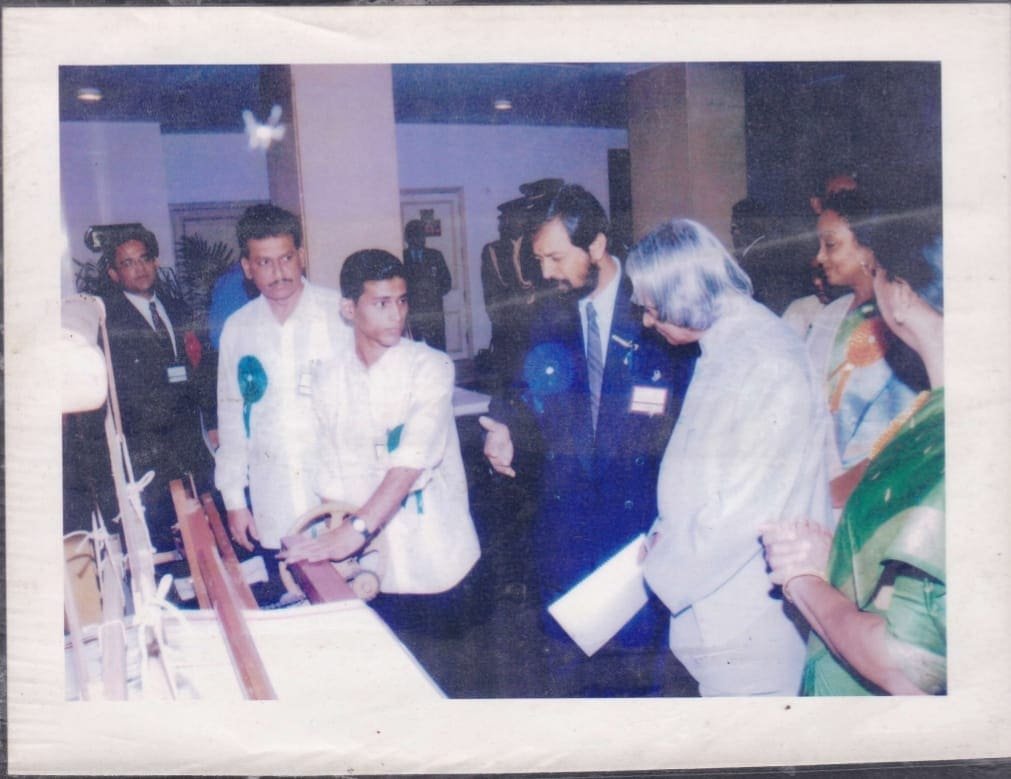
Considering this innovation for the good cause of the Society, Mr. N.D.Mhatre was awarded “National Award” by Dr. A.P.J. Abdul Kalam, President of India, on 6th Dec’2004 at Vigyan Bhavan, New Delhi and “The NCPEDP- Shell Helen Keller Award by Mr. P. Chidambaram, Union Finance Minister, on 6th Dec’2004 at New Delhi.
Mr. Mhatre realizing the importance of the development of the Handloom to be operated by the physically challenged person and serving it as the self-reliant tool as revenue generation model, he decided to take his vision of making the Physically Challenged to be Atma Nirbhar through a Charitable Trust ‘Leela Mhatre Pratisthan’ which he formed in his mother’s name who was a devotee in offering services to the needy.
Thus, the Mission was followed by a number of Seminars, Workshops and gatherings of physically challenged persons at Malegaon, Shirol (Jaysingpur), Ichalkaranji, Raigad and Srivardhan by creating awareness and benefits of his developments.
“Awareness, Guidance and Motivational Seminar” with the initiative of Divyang Educational and Welfare Society was organised on 9th September 2021 in the Municipal School No.1, Qidwai Road, Malegaon, Dist. Nashik, Maharashtra, which registered more than 500 disabled persons from the regions in and around Malegaon.
Shri N.D. Mhatre, Chairman & Managing Trustee, “Leela Mhatre Pratishthan” Mumbai, being the Chief Guest who briefed the Hard Work behind the receipt of the Presidential Award about making a Handloom for the Disabled and motivated the attendees to strive for perfection and service to others.
The Trust installed one developed handloom at Malegaon and gave training to the Physically Challenged Beneficiary to use the Employment gadgets. Organised the assistance & Supervision to the Beneficiary at least for 6 months to achieve his Revenue Targets.
Arrangements of the backwards (yarn in the form of a ready-made warper’s beam on the Handloom) integration so that the product selected has the market value, as well as the physically challenged beneficiary is able to earn a reasonable revenue at the end of the day.
We can look at the handloom as
- User-friendly
- Eco-friendly
- Environment friendly
- Family-friendly
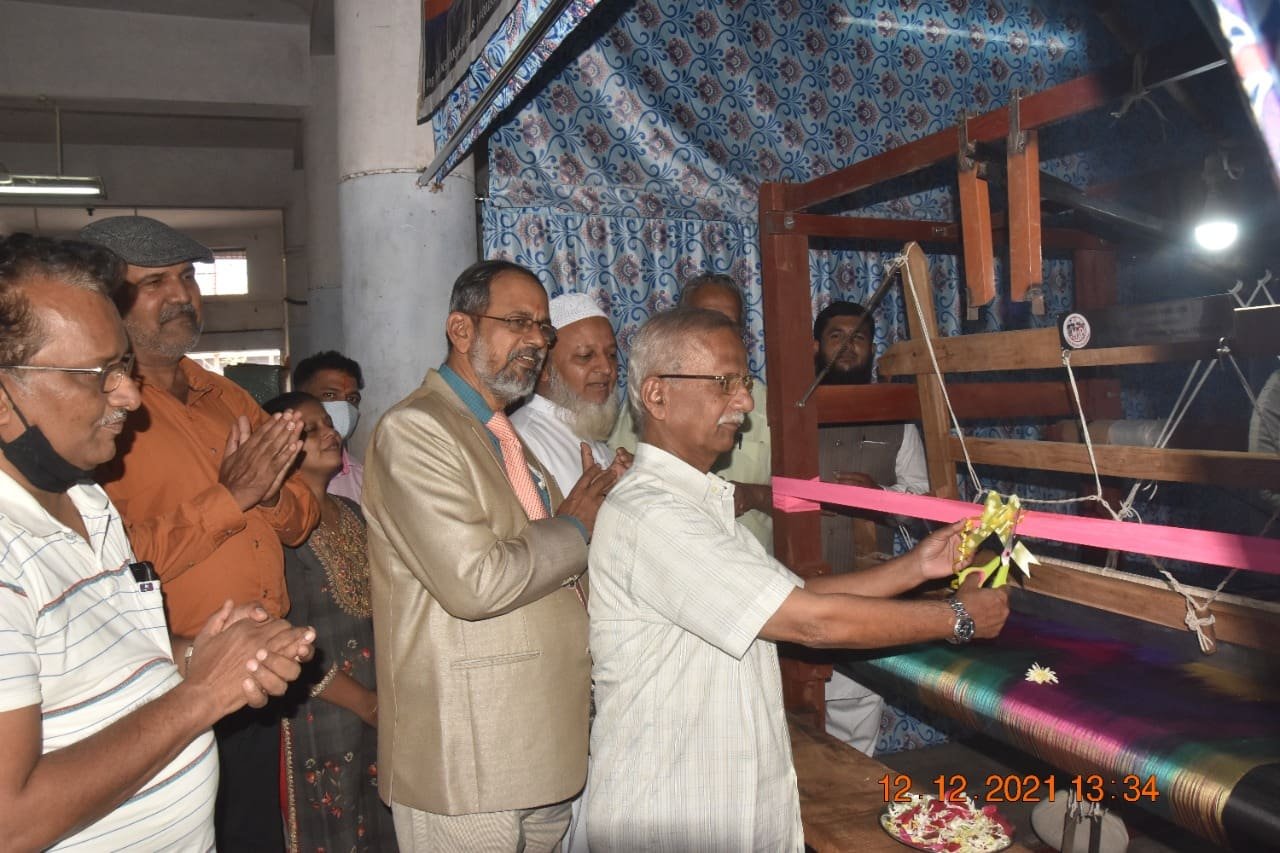
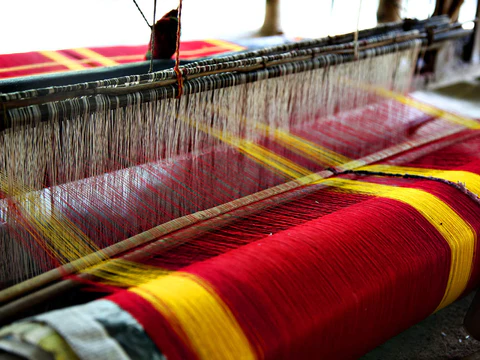
Handloom weaving plays a vital role in promoting sustainable fashion, empowering artisans, and supporting rural economies. It offers a low-impact production method using natural fibres and dyes, reducing the environmental footprint of the fashion industry. By supporting handloom, consumers contribute to the livelihoods of artisans, preserve traditional crafts, and foster economic growth in rural communities.
As Sustainable Fashion, Handloom fabrics are typically made from natural fibres like cotton, silk, and wool, which are biodegradable and have a lower environmental impact compared to synthetic materials. Handloom weaving is a low-energy process that relies on human skill rather than electricity or fossil fuels, significantly reducing the carbon footprint, thus creating minimal Environmental impact. Handloom often utilises natural dyes derived from plants, minerals, and other organic materials, minimising the use of harmful chemical dyes that can pollute water bodies. Handloom aligns with the principles of slow fashion by emphasising quality, durability, and timeless designs, encouraging consumers to invest in fewer, longer-lasting garments.
The handloom sector provides crucial employment opportunities, especially in rural areas, offering a sustainable source of income for weavers, spinners, dyers, and other skilled workers, and also empowers Artisans. Handloom weaving is deeply intertwined with cultural heritage, with traditional techniques and designs passed down through generations.
The sector supports a large number of women artisans, providing them with economic independence and contributing to their overall empowerment. Handloom weaving fosters decentralised production in rural areas, promoting economic growth and reducing reliance on large-scale industries. By supporting handloom, consumers contribute to fair wages, safe working conditions, and the preservation of traditional livelihoods in rural communities. The handloom sector encourages diversification of economic activities in rural areas, leading to broader income sources and enhanced economic resilience.
In essence, handloom textiles offer a unique blend of environmental sustainability, social responsibility, and cultural richness, making it a powerful force for positive change in the fashion industry and beyond. By choosing handloom, consumers make a conscious decision to support a more sustainable and equitable future.